







What's Happening?
Recent studies have highlighted the role of the PD-1/PD-L1 signaling pathway in oral squamous cell carcinoma (OSCC), focusing on its impact on immune evasion and tumor progression. PD-L1, a protein expressed on tumor cells and tumor-infiltrating immune cells,
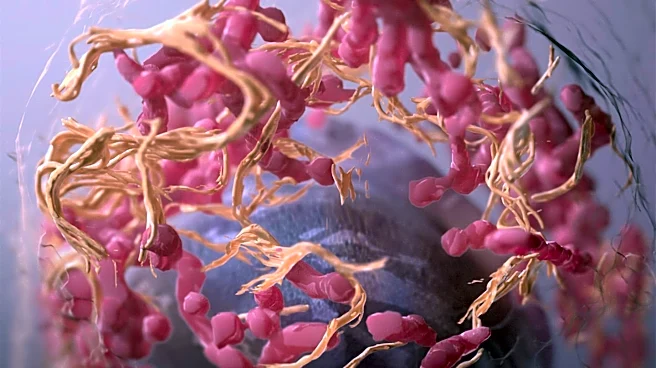
interacts with the PD-1 receptor on T-cells, leading to immune checkpoint activation. This interaction results in T-cell exhaustion and inhibition of cytotoxic activity, allowing tumor cells to evade immune surveillance and proliferate. The study found that PD-L1 expression is often upregulated in response to inflammatory cytokines within the tumor microenvironment, a phenomenon known as adaptive immune resistance. This upregulation is associated with increased tumor invasiveness and metastatic potential, particularly in lymph node metastasis.
Why It's Important?
The findings underscore the significance of PD-L1 as a potential biomarker for guiding immunotherapeutic strategies in OSCC. Immune checkpoint inhibitors targeting the PD-1/PD-L1 axis, such as Pembrolizumab and Nivolumab, have shown promising results in treating recurrent or metastatic OSCC. By blocking the inhibitory interaction between PD-1 and PD-L1, these therapies aim to restore anti-tumor immune responses. The study's insights into PD-L1 expression patterns could enhance the development of personalized treatment plans, improving outcomes for patients with OSCC. Additionally, understanding the mechanisms of immune evasion in cancer can inform broader cancer research and treatment approaches.
What's Next?
Further research is needed to validate these findings across larger, more diverse populations. Future studies should focus on longitudinal follow-up data to assess the prognostic value of PD-L1 expression in OSCC. Additionally, exploring the combined scoring system for PD-L1 expression could provide a more comprehensive assessment of its role in immune checkpoint expression. These efforts could lead to more effective use of immunotherapies and improved management of OSCC, potentially extending to other cancers with similar immune evasion mechanisms.
Beyond the Headlines
The study highlights the complex interplay between tumor cells and the immune system, emphasizing the need for a deeper understanding of immune checkpoint pathways. The role of PD-L1 in facilitating immune escape and promoting metastasis points to broader implications for cancer treatment. As research progresses, ethical considerations around access to advanced immunotherapies and the cost of treatment will become increasingly important. The integration of immunologic insights into clinical practice could transform cancer care, but it also raises questions about healthcare equity and resource allocation.