





What's Happening?
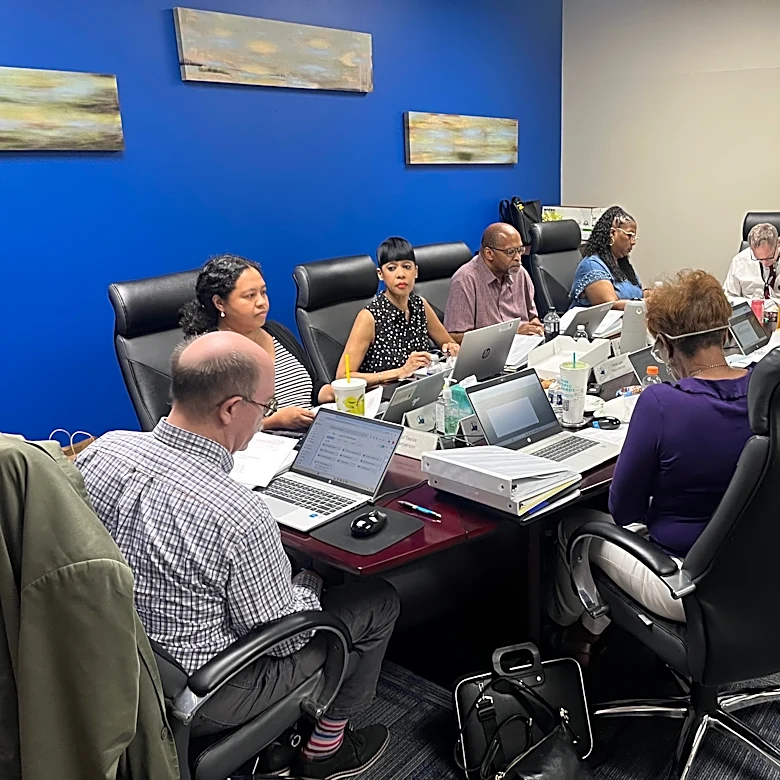
The Equal Employment Opportunity Commission (EEOC) is currently experiencing a public split regarding its proposal to rescind EEO-1 reporting requirements. A recent hearing on August 11, 2026, showcased competing arguments from various stakeholders. The EEO-1 report typically
mandates private employers with at least 100 employees and certain federal contractors with at least 50 employees to report workforce demographics by race/ethnicity and sex across job categories. Michael Eastman of the Center for Workplace Compliance highlighted how member companies utilize this data internally to identify and address issues, such as narrow applicant pools or promotion patterns suggesting misinterpretations of policy regarding race and gender. Conversely, Faye Bencosme, a private citizen, argued against the necessity of the federal government classifying Americans by race to enforce rights, supporting the rescission on 'identity-politics grounds.' The hearing did not immediately alter the reporting requirement, which remains in effect until a final rule is officially published. The public comment period for this proposal is set to close on August 24, 2026.
Why It's Important?
The debate surrounding the EEO-1 reporting requirements carries significant implications for U.S. businesses and civil rights enforcement. Proponents of maintaining the reports, like Donald Tomaskovic-Devey of the University of Massachusetts Amherst’s Center for Employment Equity, argue that the data is crucial for tracking discrimination trends and that without it, society would be 'flying blind.' Rachel Lee, president and general counsel of Stand with Asian Americans, emphasized that these filings are the only federal tool documenting the 'bamboo ceiling' faced by Asian American professionals. Weakening these enforcement mechanisms, according to Amalea Smirniotopoulos of the Legal Defense Fund, would disproportionately harm Black workers and other workers of color. On the other hand, those advocating for rescission, such as Rachel Morrison, a fellow at the Ethics and Public Policy Center and former EEOC attorney, contend that the data collection is inconsistent with equal opportunity law and potentially unconstitutional, asserting it's not essential for enforcing Title VII. The outcome will determine the future scope of federal oversight on workplace diversity and equity, impacting how companies monitor and address potential discriminatory practices.
What's Next?
The public comment period for the EEOC's proposal to rescind EEO-1 reporting requirements is scheduled to close on August 24, 2026. Following this, the EEOC will review all submitted comments and testimonies before making a final decision. The current EEO-1 data collection requirements will remain in effect until a final rule is officially published. The decision will likely face scrutiny from various stakeholders, including civil rights organizations, employer groups, and legal experts. Depending on the final rule, there could be legal challenges or further advocacy efforts from either side. The Department of Justice's recent race bias probe into William & Mary's scholarship programs, designed for people of color, indicates a broader federal focus on race-conscious policies, which could influence the EEOC's ultimate stance on data collection related to race and employment.
Beyond the Headlines
The controversy over EEO-1 reporting extends beyond mere data collection, touching upon fundamental questions about the role of government in addressing systemic discrimination and the interpretation of equal opportunity laws. The arguments presented highlight a tension between using demographic data to identify and rectify disparities and concerns about government-mandated racial classifications. This debate reflects a broader societal discussion about 'identity politics' and the most effective methods for achieving true equality in the workplace. The potential rescission could lead to a significant shift in how U.S. companies approach diversity, equity, and inclusion initiatives, possibly reducing the pressure to track and report on workforce demographics. This could also impact academic research on employment discrimination, as EEO-1 data has been a valuable resource for understanding long-term trends. The outcome will set a precedent for future federal approaches to civil rights enforcement and could influence corporate accountability regarding workforce diversity.