



What's Happening?
Rice University has announced the establishment of two new space research centers, funded by a total of $22.3 million from the Texas Space Commission and the U.S. Space Force. The Center for Space Technologies will focus on developing systems to utilize
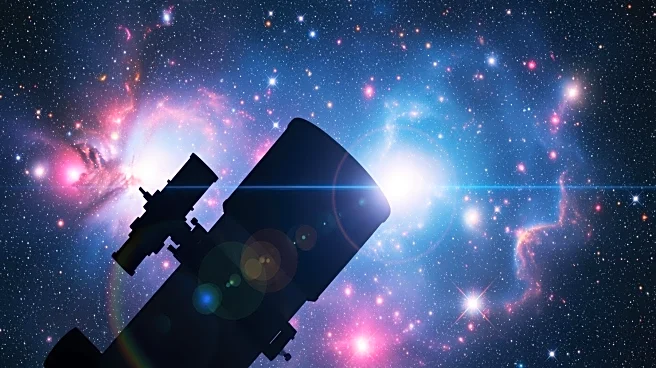
lunar resources, while the Center for Advanced Space Sensing Technologies will work on creating advanced camera systems for space observation. These centers aim to leverage artificial intelligence and other technologies to enhance space exploration capabilities. The initiatives are part of Rice University's broader effort to expand its role in space research, building on its historical ties with NASA and its contributions to space science.
Why It's Important?
The creation of these research centers at Rice University represents a significant investment in the future of space exploration and technology. By focusing on lunar resource utilization and advanced sensing technologies, the centers aim to address key challenges in space exploration, such as sustainable human presence on the Moon and improved space situational awareness. The research conducted at these centers will contribute to the development of new technologies that can be used by the U.S. Space Force and other space agencies, enhancing national security and scientific understanding. Additionally, the centers will support workforce development in the space sector, preparing the next generation of engineers and scientists.
What's Next?
The Center for Advanced Space Sensing Technologies will hold its official kickoff meeting at the end of April, marking the start of its research activities. The Center for Space Technologies is expected to open in the summer, pending finalization of grant details. Both centers will collaborate with other universities and industry partners to advance their research goals. As these centers begin their work, they will contribute to ongoing efforts to establish a sustainable human presence on the Moon and improve space observation capabilities. The research outcomes are expected to have wide-ranging applications in both civilian and military space operations.