


What's Happening?
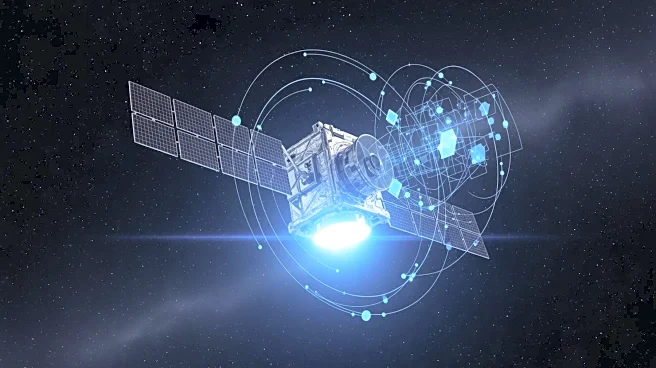
Cybersecurity experts are raising alarms about the potential for artificial intelligence (AI) to be used in hijacking satellites, which could lead to deliberate collisions in space. Researchers at the CR14 cybersecurity center in Estonia have highlighted
the rapid advancements in AI, which could enable hackers to take control of orbiting spacecraft within the next two years. The concern is particularly focused on 'agentic AI' systems that can independently plan and execute tasks without human intervention. Many older satellites lack cybersecurity protections, making them vulnerable to such attacks. The use of AI language models has significantly reduced the time required to exploit known vulnerabilities, as demonstrated by a Russian hacking group that used these models to research satellite communications and radar systems. The frequency and sophistication of cyberattacks are increasing globally, with phishing attempts in Europe rising by 500% in recent years.
Why It's Important?
The potential for AI-driven satellite hijacking poses significant risks to global infrastructure, as satellites are crucial for GPS, weather forecasting, and internet connectivity. A successful attack could disrupt these services, leading to widespread chaos. The threat also underscores the need for enhanced cybersecurity measures in space technology, particularly for older satellites that are more susceptible to attacks. The increasing sophistication of AI in cyberattacks highlights the urgency for governments and private sectors to invest in robust cybersecurity defenses. Failure to address these vulnerabilities could have severe implications for national security and economic stability, as satellites play a critical role in various sectors, including defense, communications, and navigation.
What's Next?
In response to these threats, there is likely to be increased collaboration between governments, space agencies, and cybersecurity firms to develop and implement stronger security protocols for satellites. This may involve retrofitting older satellites with updated security measures and designing new satellites with built-in cybersecurity features. Additionally, international cooperation may be necessary to establish norms and regulations for the use of AI in space to prevent malicious activities. As the threat of AI-driven cyberattacks grows, stakeholders will need to prioritize research and development in cybersecurity technologies to safeguard critical space infrastructure.