





What's Happening?
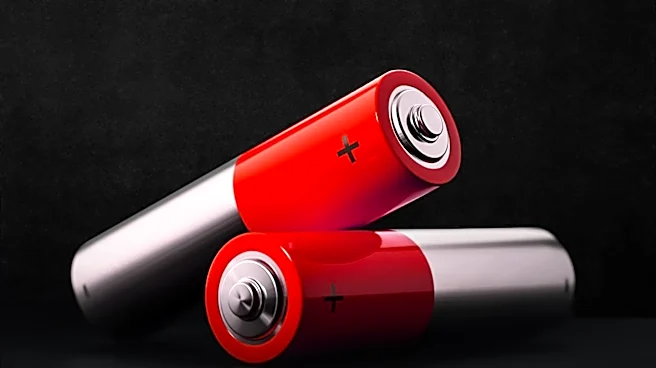
Researchers at Flinders University have developed a new aqueous zinc-iodine rechargeable battery (AZIB) that offers a high-performing, safe, and sustainable alternative to traditional lithium-ion batteries for large-scale energy storage. This innovative
battery can achieve over 60,000 charge cycles and charge in as little as three minutes. The team addressed the 'shuttle effect,' a common issue in zinc-iodine batteries where polyiodine species degrade performance, by using a low-cost, biodegradable cyclodextrin-based polymer derived from starch. This polymer acts as a microscopic cage, trapping and releasing polyhalides to prevent leakage. The battery operates at 1.3 to 1.4 volts, delivering a capacity of 200 mAh/g over 8,000 cycles with a seven-minute charge, or 150 mAh/g over 60,000 cycles with a three-minute charge. Its degradation rate is remarkably low, between 0.0001% and 0.0003% per cycle.
Why It's Important?
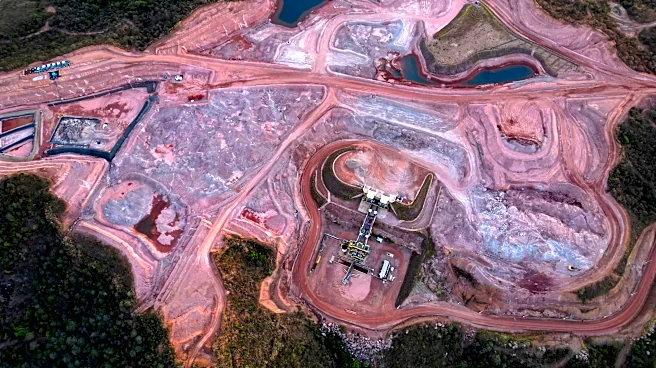
This development holds significant implications for the energy storage industry, particularly in the U.S. and globally, by offering a safer and more sustainable alternative to lithium-ion batteries. Lithium-ion batteries are known for their fire risks, high cost, and environmental waste, with Australia alone generating thousands of tonnes of lithium battery waste annually. Zinc-based batteries, in contrast, eliminate fire risks and utilize abundant raw materials, making them a cost-effective solution. The U.S. currently relies heavily on lithium processing concentrated in countries like China, making it vulnerable to supply shocks. The strategic advantage for Australia, which holds 20% to 28% of the world's known zinc reserves, could shift global energy storage dynamics. This technology could foster a more secure and sovereign energy storage industry, reducing dependence on volatile supply chains and promoting domestic resource utilization.
What's Next?
The Flinders lab is actively collaborating with industry partners to establish a commercial prototyping platform for this aqueous zinc-iodine battery system. This collaboration aims to transition the technology from research to practical application, potentially leading to the widespread adoption of these batteries for large-scale grid storage. The focus will be on scaling up production and integrating the technology into existing energy infrastructure. The success of these commercialization efforts could pave the way for a new era of energy storage, moving away from scarce and flammable metals towards more sustainable and accessible options like zinc and plant sugar derivatives. Further research will likely focus on optimizing the battery's performance and exploring additional applications beyond large-scale storage.
Beyond the Headlines
The shift towards zinc-iodine batteries could trigger a broader re-evaluation of material sourcing and supply chain resilience in the energy sector. The ethical and environmental considerations associated with lithium mining and disposal have been a growing concern, and this alternative offers a path toward more responsible energy solutions. The use of biodegradable materials like starch in battery components also highlights a trend towards integrating bio-based solutions into advanced technologies, potentially reducing the ecological footprint of energy storage. This innovation could also stimulate economic growth in regions with significant zinc reserves, fostering new industries and job opportunities. The long-term impact could be a more diversified and resilient global energy landscape, less susceptible to geopolitical tensions related to critical mineral supplies.