




What's Happening?
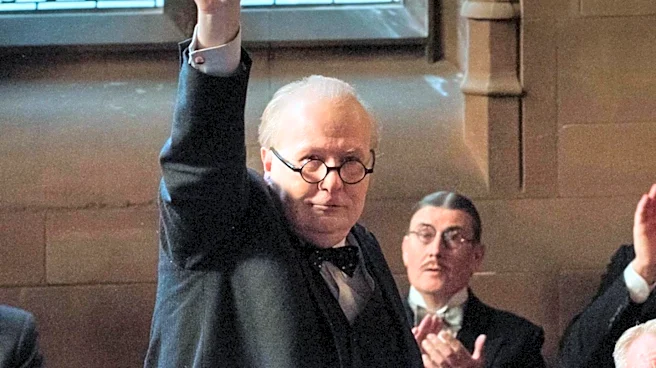
Helen Cammock, a Turner prize-winning artist, has withdrawn her video work titled 'Persistence' from the National Portrait Gallery (NPG) in London. The video, which criticizes former British Prime Minister Winston Churchill, particularly for his alleged
role in the 1943 Bengal famine, sparked significant controversy. Over 50 members of the House of Lords, including Churchill's grandson Nicholas Soames, condemned the work, describing it as a 'taxpayer-funded rant' against Churchill. The video had been part of an exhibition called 'Artists First: Contemporary Perspectives on Portraiture' since September and was scheduled to run until August. Cammock's decision to remove the piece was influenced by the backlash, although she maintains that the work will continue to exist and provoke discussion elsewhere.
Why It's Important?
The removal of Cammock's work highlights ongoing debates about free speech and historical interpretation in public institutions. The controversy underscores the tension between artistic expression and historical accuracy, especially when dealing with figures like Churchill, whose legacies are complex and contested. The incident also reflects broader societal discussions about how history is remembered and who gets to tell these stories. For the National Portrait Gallery, the situation raises questions about the role of museums in facilitating controversial discussions and the pressures they face from political and public entities.
What's Next?
The debate surrounding Cammock's work is likely to continue, with potential implications for how museums and galleries handle controversial art in the future. The National Portrait Gallery may face increased scrutiny over its curatorial decisions and the balance it strikes between artistic freedom and historical representation. Artists and cultural institutions might also become more cautious in their approach to politically sensitive topics, potentially leading to self-censorship or more robust defenses of artistic expression.
Beyond the Headlines
This incident could have long-term implications for the art world, particularly in how artists engage with historical figures and events. It raises ethical questions about the responsibilities of artists to historical accuracy versus their right to creative expression. Additionally, it may influence how public funding is allocated to art projects that tackle contentious historical narratives, potentially affecting the types of works that are commissioned and displayed in public institutions.