






What's Happening?
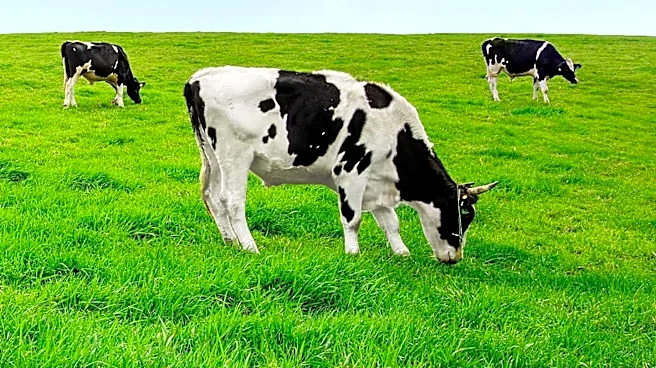
A recent study has highlighted the significant role of ruminant livestock, such as cows, goats, and sheep, in contributing to global methane emissions. These animals are responsible for about a third of all methane gas in the atmosphere, which is a major
factor in the rise of global temperatures over the past 150 years. Methane, although it decays faster than carbon dioxide, is a potent greenhouse gas. Researchers are focusing on the specialized stomachs of these animals to understand the biological mechanisms that produce methane, aiming to mitigate its impact on global warming. The study, published in Science, has identified a new organelle called the 'hydrogenobody' in ciliates, which are large predatory microbes in the rumen. This organelle is crucial in the biochemical process that leads to methane production.
Why It's Important?
The findings of this study are crucial as they offer new insights into managing methane emissions from livestock, a significant source of global warming. By understanding the specific mechanisms of methane production, scientists can develop targeted strategies to reduce emissions. This could have a substantial impact on climate change mitigation efforts, as reducing methane emissions is a more immediate way to slow global warming compared to carbon dioxide. The study also opens up possibilities for developing feed additives or probiotics that could effectively reduce methane emissions from livestock, thereby contributing to more sustainable agricultural practices.
What's Next?
Future research will likely focus on further understanding the rumen's microbial ecosystem and the specific roles of different microorganisms in methane production. Scientists may explore ways to manipulate the rumen environment to reduce methane emissions without disrupting the digestive processes of livestock. Additionally, there could be increased interest in developing and testing feed additives that target the newly discovered hydrogenobodies to curb methane production. These efforts could lead to more effective strategies for reducing the environmental impact of animal agriculture.