

What's Happening?
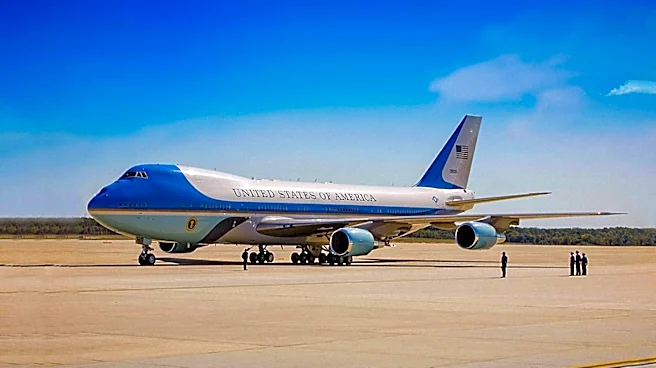
The Secret Service reportedly urged President Trump to return from Turkey on the older Air Force One aircraft, rather than the newer one he had used for his arrival. This detail was discussed by Bobby McDonald, an assistant professor of practice in criminal
justice, who analyzed the decision-making process and the entities involved in such a high-level logistical choice. The discussion highlighted the complexities and considerations that go into presidential travel, particularly concerning security and operational protocols. The specific reasons for the Secret Service's recommendation were not explicitly detailed in the provided information, but such decisions typically involve a myriad of factors, including security assessments, mechanical readiness, and strategic considerations for presidential safety and continuity of government operations. This event sheds light on the intricate planning and coordination required for presidential movements, especially in international contexts.
Why It's Important?
This incident underscores the critical role of the Secret Service in ensuring the safety and security of the President of the United States, particularly during international travel. The decision to recommend a specific aircraft for departure, even if it's an older model, highlights the agency's meticulous approach to risk assessment and operational planning. For the U.S., the continuity and security of its leadership are paramount, and any decision related to presidential transport carries significant weight. It reflects the extensive resources and protocols in place to protect the President from potential threats, both known and unforeseen. Such events also offer a glimpse into the behind-the-scenes operations that maintain the stability and functionality of the U.S. government, reinforcing public trust in the protective services and their strategic capabilities. The choice of aircraft can have implications for national security, diplomatic messaging, and the overall perception of presidential readiness.
What's Next?
While the immediate event has passed, the underlying principles of presidential security and logistical planning remain constant. Future presidential travel, both domestic and international, will continue to involve similar rigorous assessments by the Secret Service and other relevant agencies. The incident may prompt internal reviews or refinements of existing protocols, ensuring that all contingencies are accounted for in presidential movements. Public discussions, like the one involving Professor McDonald, contribute to a broader understanding of these complex operations, potentially influencing public policy debates around funding for presidential security or the acquisition of new presidential transport assets. The ongoing evolution of global threats will continuously challenge and shape these security decisions, requiring constant adaptation and innovation from the protective services responsible for the President's safety.
Beyond the Headlines
Beyond the immediate security implications, the choice of presidential aircraft can carry symbolic weight in international relations. The use of a specific Air Force One model, whether newer or older, can subtly communicate messages about U.S. capabilities, readiness, or even diplomatic posture to host nations and the global community. This incident also highlights the immense logistical and financial resources dedicated to presidential protection, reflecting the high value placed on the office of the President. Ethically, such decisions involve balancing the President's safety with operational efficiency and public perception. The involvement of experts like Professor McDonald in public discourse helps demystify these complex operations, fostering greater transparency and public understanding of the intricate machinery that supports the U.S. presidency. It also serves as a reminder of the constant vigilance required to safeguard national leadership in an unpredictable world.