






What's Happening?
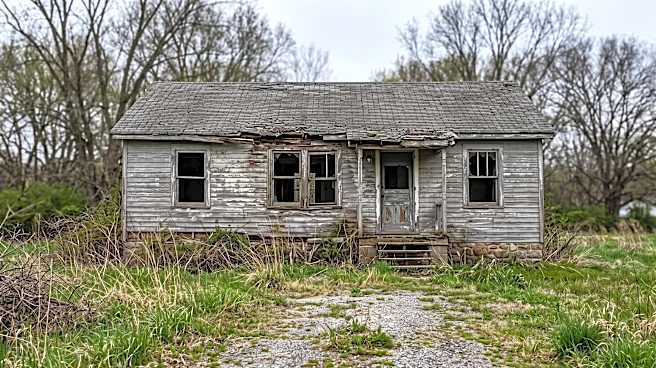
Wausau, Wisconsin, is moving to acquire an abandoned former Habitat for Humanity home from Marathon County for $1, with plans to demolish the structure before it can be flipped at auction. City staff, citing the house's dangerous condition and black mold
infestation, believe demolition is necessary. Concurrently, the Economic Development Committee will consider a deed restriction for the 1300 Cleveland Avenue property, a contaminated city-owned site, to permanently prohibit industrial use. This restriction aims to formalize a long-standing commitment to neighbors who have opposed industrial development on the site, which has known elevated PFAS levels in its groundwater.
Why It's Important?
The proposed actions in Wausau are significant for urban planning, environmental protection, and community development. The acquisition and demolition of the Myron Street property address a blighted asset, preventing potential hazards and preparing the land for future, income-qualified housing. This demonstrates a proactive approach to managing distressed properties and supporting affordable housing initiatives. The deed restriction on the Cleveland Avenue site is crucial for environmental justice and community trust. By permanently barring industrial use, the city is responding to years of resident advocacy, protecting the neighborhood from further contamination, and potentially paving the way for more community-friendly reuse options. This sets a precedent for how municipalities can address environmental concerns and honor commitments to their citizens.
What's Next?
The Economic Development Committee will review the $1 purchase and demolition plan for the Myron Street property, as well as the proposed deed restriction for 1300 Cleveland Avenue, on Wednesday. If approved by the committee, both items will then proceed to the Wausau City Council for a vote on November 24. The city is also exploring options for the Cleveland Avenue property's reuse, including EPA technical assistance and potential DNR Ready for Reuse and WEDC Brownfields grants. The cleared Myron Street lot could be offered through the city’s Property Disposition program for a single-family home for an income-qualified owner-occupant. Additionally, the committee will consider a $5.57 million plan for lead pipe and 17th Avenue work through Tax Increment District 8.
Beyond the Headlines
These developments in Wausau highlight the complex interplay between urban decay, environmental remediation, and community aspirations. The decision to demolish the Myron Street home reflects a broader challenge in many U.S. cities regarding abandoned properties and their impact on neighborhood aesthetics and safety. The Cleveland Avenue deed restriction underscores the growing demand for environmental accountability and the power of community activism in shaping local land use policies. It also brings to light the long-term implications of industrial contamination and the financial and logistical hurdles involved in brownfield redevelopment. The city's efforts to secure grants and technical assistance for the Cleveland Avenue site illustrate the collaborative approach often required to tackle such multifaceted urban problems, involving local, state, and federal entities.