










What's Happening?
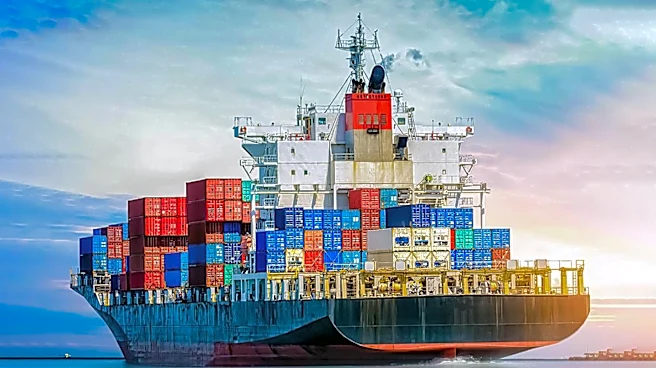
Recent attacks on Black Sea ports and shipping routes have disrupted Russian and Ukrainian grain exports, leading to increased demand for European Union grain. Analysts suggest that countries like Romania, Bulgaria, and France could see a rise in grain export demand due
to their geographical proximity and similar economic conditions. The disruptions have caused wheat prices to surge, with U.S. futures reaching two-year highs. The attacks mark a shift from previous conflicts where grain export ships were not targeted, raising concerns about the stability of global grain supply chains.
Why It's Important?
The disruption of grain exports from Russia and Ukraine, two major global suppliers, has significant implications for international food markets. The increase in wheat prices can lead to higher food costs worldwide, affecting consumers and economies. EU countries stand to gain market share, potentially offsetting some of the economic impacts of the disruptions. However, the lack of an exportable surplus in the EU could limit the extent of this benefit. The situation highlights the vulnerability of global supply chains to geopolitical tensions and the need for diversified sourcing strategies.
What's Next?
As the situation evolves, EU countries may need to adjust their export strategies to capitalize on the increased demand. The ongoing conflict in the Black Sea region could lead to further disruptions, prompting importers to seek more stable supply sources. Monitoring the geopolitical developments and their impact on shipping routes will be crucial for stakeholders in the grain market. Additionally, efforts to stabilize the region and ensure safe passage for grain exports may become a focus of international diplomatic efforts.