








What's Happening?
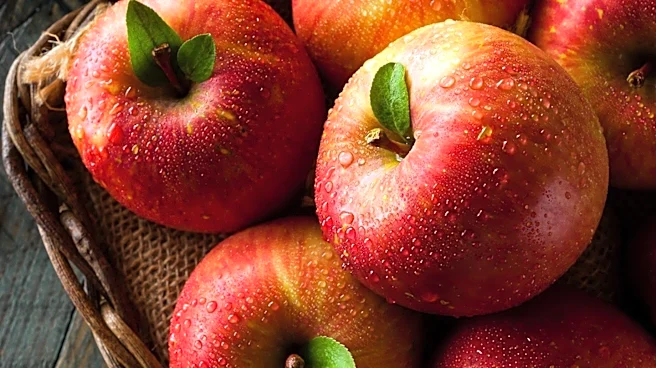
Splendor apples, also known as Splendour or Starksplendor, are an heirloom apple variety belonging to the species Malus Domestica. These medium to large apples are characterized by their thin, dull red over green skin with green lenticels, and a crisp,
pale to deep yellow flesh that is both juicy and sweet. Splendor apple trees are noted for their reliability and abundant fruit production, with availability typically in late Autumn. While once bred for commercial use, their delicate skin, which bruises easily, led to a decline in their commercial market presence, particularly for shipping. Consequently, Splendor apples are now a rarity in commercial markets, though they maintain a concentrated presence in New Zealand.
Why It's Important?
The story of the Splendor apple highlights the challenges faced by certain agricultural varieties in a commercialized food system. Despite their desirable taste and reliable yield, the physical vulnerability of their skin made them unsuitable for the rigors of large-scale shipping and distribution. This situation underscores a broader trend where aesthetic perfection and durability for transport often take precedence over unique flavor profiles or other beneficial characteristics in the commercial market. For consumers, this means a reduced diversity of apple varieties available in mainstream grocery stores, pushing unique and heirloom types like the Splendor apple into niche markets or local cultivation. The apple's resistance to fire blight disease also makes it a valuable genetic resource for apple breeding programs, potentially contributing to the development of more resilient commercial varieties in the future.
What's Next?
Given their current status, Splendor apples are likely to remain a specialty item, primarily found in farmers' markets, orchards that cater to heirloom varieties, or directly from growers in regions where they are cultivated, particularly in New Zealand. Efforts by enthusiasts and small-scale farmers to preserve and promote heirloom varieties could lead to a slight resurgence in their availability, especially as consumer interest in unique and locally sourced produce grows. Research into apple breeding may also continue to utilize the Splendor apple's fire blight resistance, potentially leading to new hybrid varieties that combine its desirable traits with greater commercial viability. However, a widespread return to commercial grocery shelves for the original Splendor apple is improbable due to its inherent fragility.
Beyond the Headlines
The narrative of the Splendor apple extends beyond mere agricultural economics, touching upon themes of biodiversity and the value placed on different qualities in food production. The decline of such varieties in commercial settings raises questions about the long-term implications for genetic diversity within our food supply. Relying on a limited number of commercially viable varieties can make agricultural systems more susceptible to diseases and pests. Furthermore, the preference for visually perfect and transport-friendly produce over unique flavors or textures can diminish the culinary experience and connection to food origins. The continued existence of apples like the Splendor, even in niche markets, serves as a reminder of the rich genetic heritage of cultivated plants and the ongoing efforts to preserve this diversity for future generations.