
What's Happening?
A recent analysis of ancient teeth has provided scientists with insights into the interactions between early human relatives, specifically Homo erectus, which emerged in Africa over 2 million years ago.
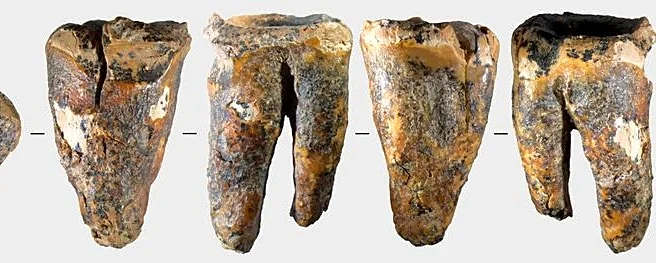
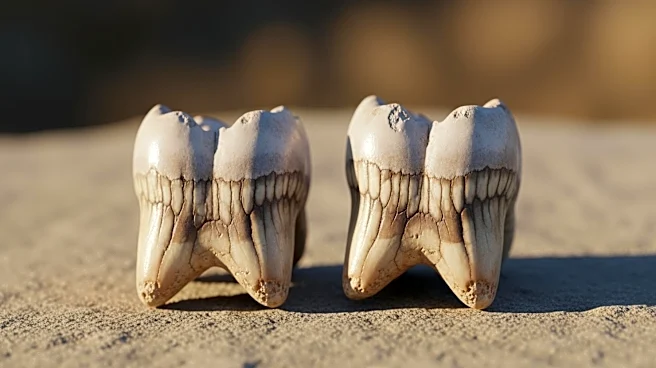
The study, conducted by researchers including Qiaomei Fu from the Institute of Vertebrate Paleontology and Paleoanthropology in China, examined enamel proteins from teeth found in China. These findings suggest that Homo erectus may have interbred with Denisovans, another extinct human species, as indicated by shared genetic variants. This research highlights the complex web of human evolution and the genetic legacy left by these early interactions.
Why It's Important?
The study's findings are significant as they offer a deeper understanding of human evolution and the genetic exchanges that have shaped modern humans. By uncovering evidence of interbreeding between Homo erectus and Denisovans, scientists can better understand the migration patterns and interactions of ancient human species. This research not only sheds light on the ancestry of modern humans but also emphasizes the importance of genetic diversity in human evolution. The study's implications extend to fields such as anthropology, genetics, and evolutionary biology, providing a foundation for future research into human origins.
What's Next?
Future research will likely focus on obtaining more DNA samples and fossil evidence to further unravel the relationships between early human species. Scientists aim to clarify the genetic contributions of Homo erectus to modern humans and other extinct relatives. Continued exploration of archaeological sites and advancements in genetic analysis techniques will be crucial in piecing together the complex history of human evolution. These efforts may lead to new discoveries about the migration and interaction patterns of ancient human populations.