



What's Happening?
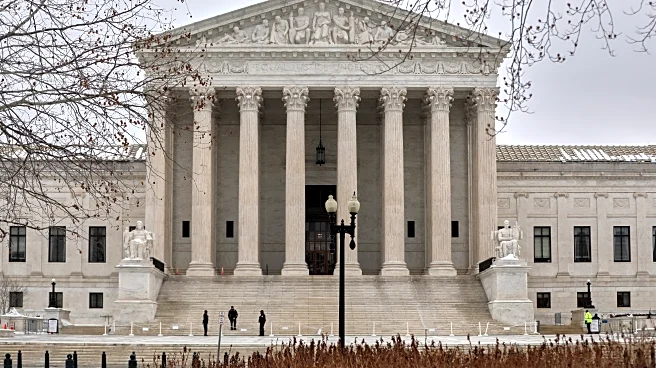
The U.S. Supreme Court has overturned President Trump's tariff policy, which had imposed 'Liberation Day' tariffs on all countries since April 2025. The 6-3 decision, which crossed ideological lines, ruled against the tariffs that had generated approximately
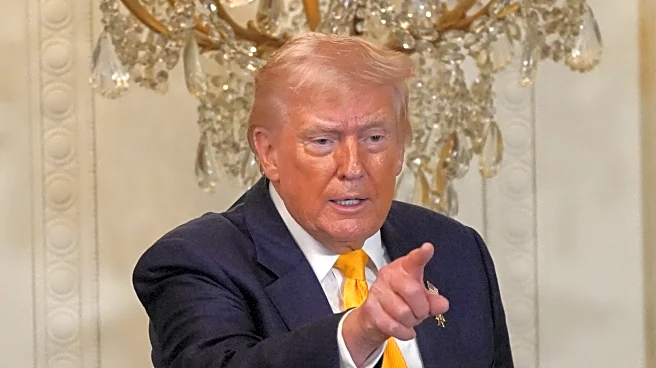
$133 billion in revenue. President Trump expressed disappointment with the ruling and announced plans to implement a global 10% tariff as an interim measure. The tariffs were initially enacted under the International Emergency Economic Powers Act (IEEPA), a statute that the Trump administration argued provided the authority to regulate imports. The ruling has created uncertainty in supply chains, particularly affecting national defense industries.
Why It's Important?
The Supreme Court's decision has significant implications for U.S. national security and international relations. The tariffs had strained relationships with key allies, including NATO members, Canada, Japan, and South Korea, potentially weakening collective defense efforts. Economically, the tariffs increased costs for defense companies, impacting their ability to meet U.S. defense requirements. The ruling may lead to increased intra-alliance tensions and provide opportunities for adversaries like China to exploit divisions. The decision also highlights the limits of presidential power in imposing tariffs without clear congressional authorization.
What's Next?
In response to the ruling, President Trump plans to impose a global 10% tariff, which will be limited to 150 days. This move may face legal challenges and further scrutiny from Congress and international partners. The decision could prompt allies to seek greater strategic autonomy, potentially reducing reliance on U.S. defense products. The legal and economic ramifications of the ruling will unfold in the coming weeks, with potential impacts on U.S. industries and international trade relations.
Beyond the Headlines
The ruling underscores the importance of checks and balances in U.S. governance, particularly concerning executive power in economic policy. It also raises questions about the future of U.S. trade policy and its alignment with national security objectives. The decision may influence future administrations' approaches to international trade and economic diplomacy, emphasizing the need for clear legislative backing for significant economic measures.