



What's Happening?
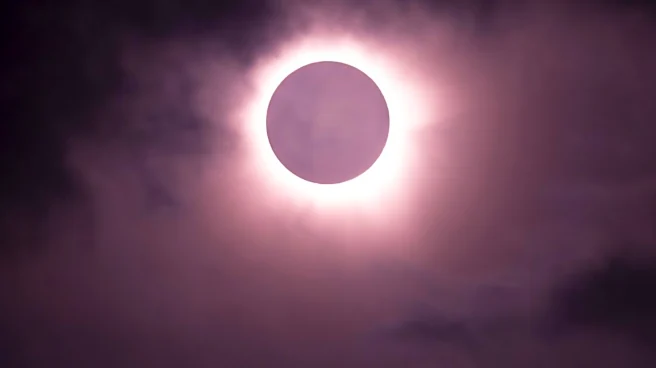
A solar eclipse is set to occur on August 12, 2026, visible in parts of western Europe, Canada, and the northern U.S. However, weather conditions, including clouds and rain, may obstruct the view in some areas. The eclipse will be visible in the morning
in Alaska and northern Canada, early afternoon in the northern U.S., and evening in western Europe. The path of totality will pass through eastern Greenland, western Iceland, and northern Spain. Weather forecasts indicate that while summer typically lacks large-scale low-pressure systems, localized showers and thunderstorms could still impact visibility.
Why It's Important?
The solar eclipse presents a rare opportunity for millions of people to witness a celestial event that can inspire interest in astronomy and science. However, weather conditions could limit this opportunity, affecting public engagement and educational activities planned around the eclipse. The event also serves as a reminder of the challenges in predicting weather patterns and their impact on astronomical observations.
What's Next?
As the eclipse date approaches, meteorologists will continue to refine weather forecasts to provide more accurate predictions of cloud cover and precipitation. This information will be crucial for those planning to view the eclipse, as well as for scientists conducting observations. Public and private organizations may also adjust their plans for eclipse-related events based on updated forecasts.