



What's Happening?
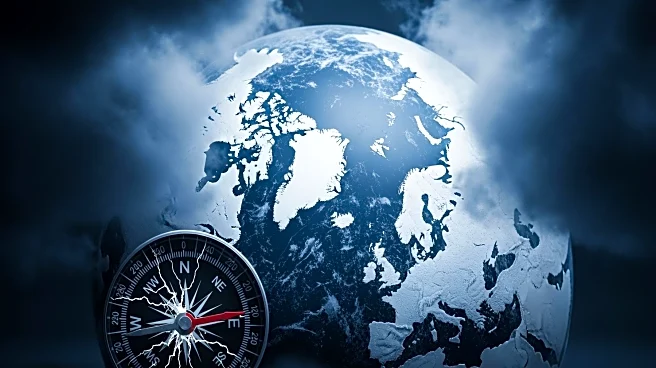
Russian Foreign Minister Sergey Lavrov has criticized U.S. President Donald Trump's attempt to acquire Greenland, describing it as a potential crisis for NATO. Lavrov expressed concerns that this move could lead to a scenario where one NATO member might
attack another, challenging the alliance's unity. He argued that Trump's actions disrupt the Western 'rule-based global order' and could lead to significant upheaval in Europe. Lavrov also addressed Trump's initiative to establish a Board of Peace, which aims to address global crises, and noted Russia's cautious approval of this effort. Additionally, Lavrov commented on U.S.-Russia relations, highlighting ongoing dialogues and areas of contention, such as the New START arms control treaty and the situation in Ukraine.
Why It's Important?
The potential acquisition of Greenland by the U.S. raises significant geopolitical concerns, particularly regarding NATO's stability and the broader implications for international alliances. Lavrov's remarks underscore the tensions between Russia and the West, as well as the challenges facing NATO in maintaining cohesion among its members. The situation also highlights the complexities of U.S.-Russia relations, where cooperation and conflict coexist. The establishment of a Board of Peace could reshape global diplomatic efforts, potentially offering an alternative to existing international organizations like the United Nations. These developments could have far-reaching impacts on global security and diplomatic relations.
What's Next?
The international community will likely monitor the situation closely, with potential diplomatic responses from NATO members and other global powers. The U.S. may need to address concerns from its allies regarding the Greenland bid and its implications for NATO. Additionally, the progress of the Board of Peace initiative will be watched to see how it might influence global conflict resolution efforts. Russia's stance on these issues will also be pivotal, as it navigates its relationship with the U.S. and other Western nations.