


What's Happening?
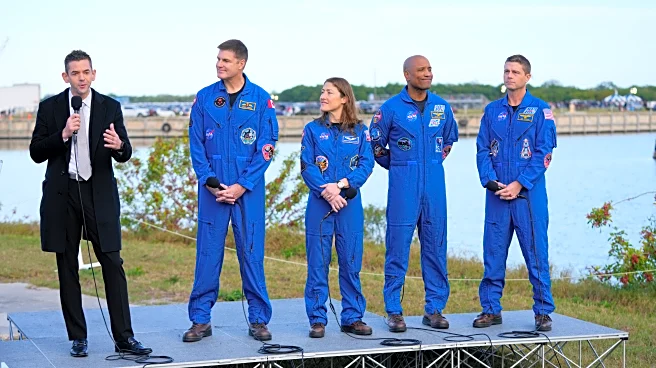
The Artemis II mission, set to launch from Kennedy Space Center in Florida, will be the first crewed mission to the moon since 1972. The four-person crew will embark on a nine-day journey covering nearly half a million miles, looping around the moon's
far side before returning to Earth. Given the inherent risks of space travel, NASA has coordinated with the Air Force's Detachment 3, a unit responsible for astronaut rescues since 1959, to ensure the crew's safety. This unit has been conducting simulations to prepare for potential emergencies, such as a mid-launch abort. The rescue operation involves a C-17 military aircraft deploying rescue equipment and pararescue jumpers to the splashdown site, ready to sustain the astronauts for up to 96 hours if necessary.
Why It's Important?
The Artemis II mission is a significant step in NASA's efforts to return humans to the moon and eventually establish a sustainable presence there. The mission's success could pave the way for future lunar landings and exploration, potentially leading to advancements in space technology and international collaboration. The involvement of a dedicated rescue team underscores the mission's complexity and the importance of astronaut safety. Successful execution of the mission could bolster public confidence in NASA's capabilities and inspire further investment in space exploration, impacting industries related to aerospace, technology, and defense.
What's Next?
As the launch date approaches, NASA and the rescue teams will continue to conduct rehearsals and refine their contingency plans. The mission's outcome will likely influence future Artemis missions, including the planned Artemis III, which aims to land astronauts on the lunar surface. Stakeholders, including international partners and private companies involved in the Artemis program, will closely monitor the mission's progress. Any lessons learned from Artemis II will be crucial in shaping the strategies and technologies used in subsequent missions.