






What's Happening?
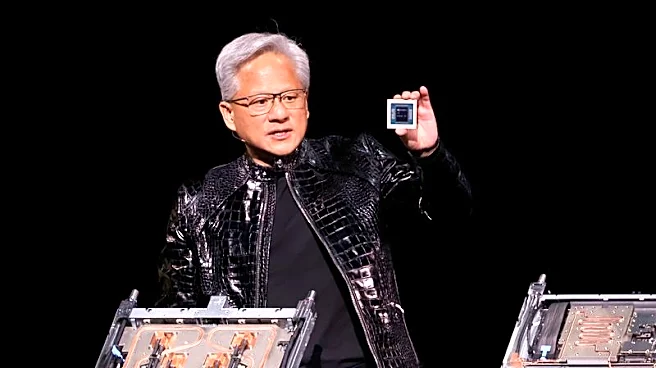
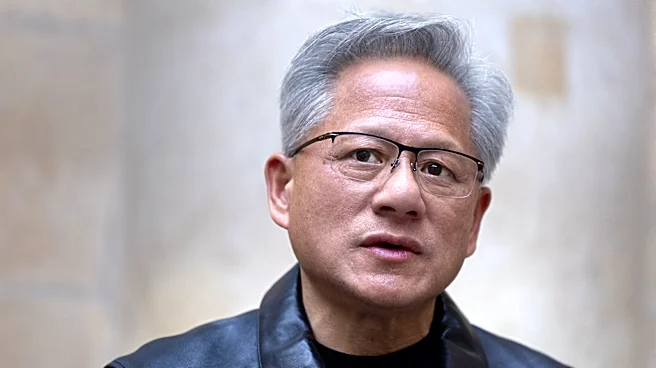
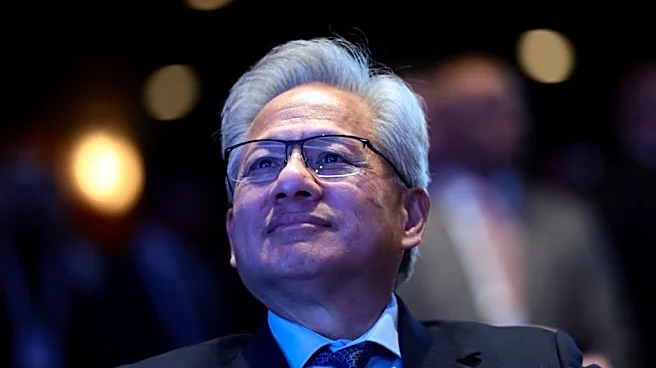
Jensen Huang, CEO of Nvidia, has resigned, creating a significant void in America's artificial intelligence sector. This development is linked to allegations of a Chinese spy targeting Huang, intensifying concerns about the U.S.-China competition for
AI dominance. Nvidia, under Huang's leadership, had become the first company to surpass a $5 trillion market value. The company has also faced scrutiny, including an investigation in Singapore in 2025 regarding chip smuggling reports. China's national security laws, which can compel citizens to provide information to the Ministry of State Security, raise concerns about potential pressure on Chinese nationals, including business executives and university students, working abroad. This situation underscores the need for the U.S. to carefully assess risks of foreign influence and espionage without assuming individual culpability. The U.S. government is now considering steps to maintain its lead in artificial intelligence amidst these challenges.
Why It's Important?
The resignation of Nvidia's CEO, coupled with alleged Chinese espionage, significantly impacts the U.S. position in the global AI race. Nvidia's dominance in the AI chip market, though challenged by rivals like AMD and tech giants developing their own chips, is crucial for U.S. technological leadership. The uncertainty surrounding Nvidia's leadership could affect the flow of private capital into the AI ecosystem, as the company has been a major financial supporter of customers and partners. Policymakers are urged to avoid imposing rules that could hinder investment, especially as the custom AI chip market is projected to grow substantially. China's push for technological self-reliance and U.S. export restrictions have already reduced Nvidia's market share in China, highlighting the strategic importance of global market competition. If the U.S. falters in AI, it could complicate China's ambitions for global influence, making this a critical moment for U.S. national security and economic strategy.
What's Next?
The immediate future will likely involve close monitoring of Nvidia's interim CEO, Colette Kress, and her management of the company's substantial financial commitments, including a $3 billion purchase of Meta stock and a $105 billion guarantee for OpenAI data-center leases in Ohio. Policymakers in the U.S. are expected to consider strategies to foster competition within the AI chip market, giving companies like AMD, Google, Amazon Web Services, Meta, and Microsoft more room to grow their own chip development. There will also be an increased focus on recognizing and countering foreign influence and espionage efforts, particularly from China, to protect U.S. technological leaders and intellectual property. The U.S. government will need to balance national security concerns with the need to maintain a dynamic and innovative AI industry, potentially re-evaluating export restrictions and market competition policies to ensure continued leadership in artificial intelligence.
Beyond the Headlines
The incident highlights deeper ethical and geopolitical implications beyond immediate business concerns. The alleged targeting of a prominent U.S. tech executive by a foreign power underscores the evolving nature of international competition, where economic and technological leadership are intertwined with national security. It raises questions about the vulnerability of key individuals and companies to state-sponsored espionage and the broader implications for intellectual property protection in a globalized economy. Furthermore, the situation prompts a re-evaluation of the balance between open innovation and national security interests, particularly concerning the movement of talent and information across borders. The U.S. response will not only shape its future in AI but also set precedents for how democratic nations address economic espionage and protect their technological advantages in an increasingly complex geopolitical landscape.