
What's Happening?
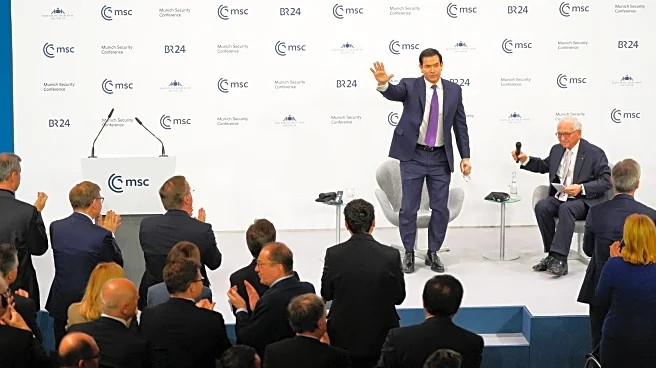
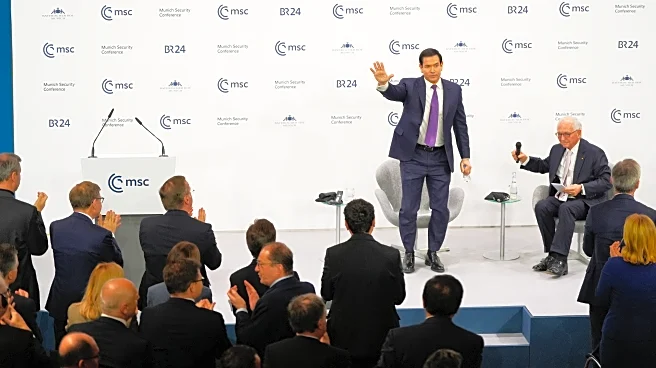
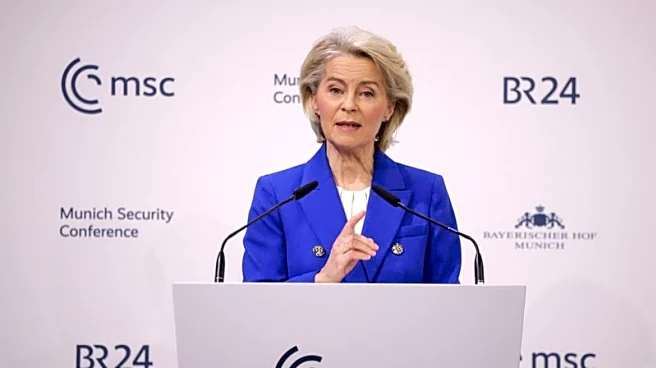
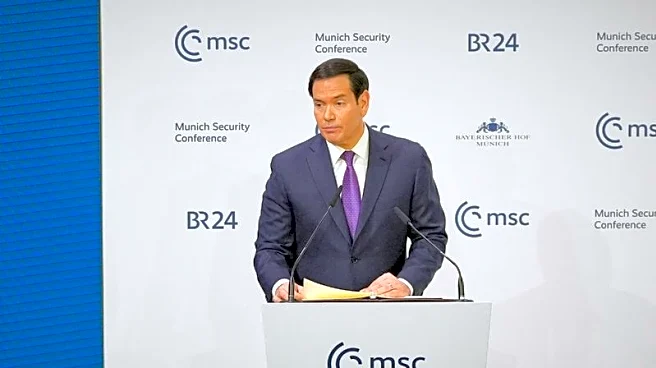
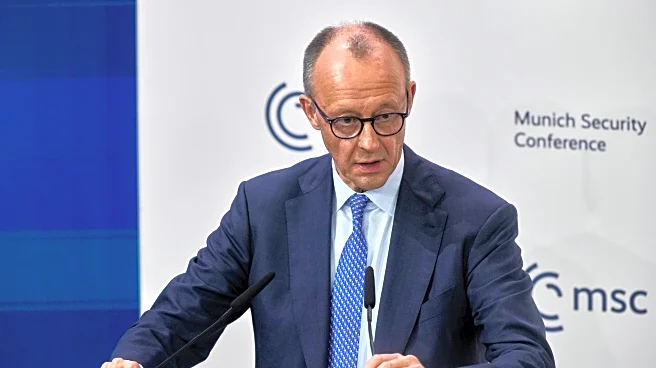
At the Munich Security Conference, leaders from Denmark and Greenland expressed ongoing concerns about President Donald Trump's interest in acquiring Greenland. Danish Prime Minister Mette Frederiksen and Greenlandic leader Jens-Frederik Nielsen stated
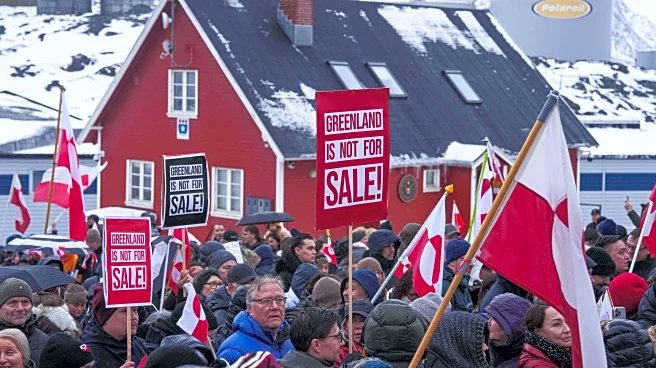
that despite previous discussions, they believe President Trump remains serious about the acquisition. This issue has been a point of tension, with both countries caught off guard by Trump's earlier statements about a potential deal. The leaders emphasized the importance of Greenland's sovereignty and expressed that the Greenlandic people feel threatened by the prospect of becoming part of the United States. Talks involving the U.S., Denmark, and Greenland have been ongoing since January to address the diplomatic crisis, but details remain scarce.
Why It's Important?
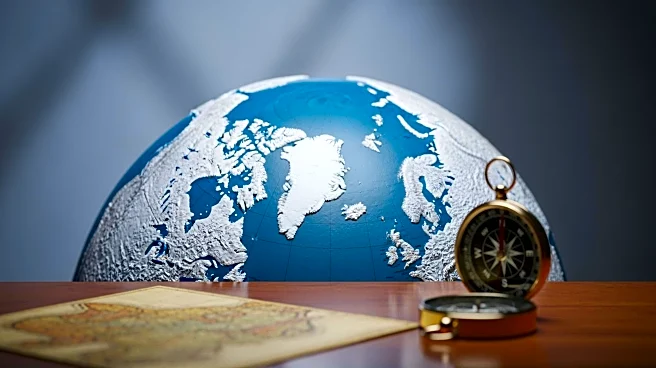
The situation highlights significant geopolitical implications, particularly concerning U.S. interests in the Arctic region. Greenland's strategic location and natural resources make it a valuable asset, which could influence U.S. national security and economic strategies. The ongoing discussions and potential acquisition could strain U.S.-Denmark relations and impact NATO dynamics, as Denmark is a key member. Additionally, the Greenlandic people's desire for independence from Denmark complicates the situation, as they have expressed no interest in becoming American. The outcome of these talks could set a precedent for international territorial negotiations and influence future U.S. foreign policy decisions.
What's Next?
The next steps involve continued diplomatic discussions between the U.S., Denmark, and Greenland to find a resolution. Denmark's Foreign Minister Lars Løkke Rasmussen expressed hope for a solution, while NATO has increased its presence in the Arctic to manage tensions. The outcome of these talks could lead to revisions in defense agreements or new diplomatic arrangements. Stakeholders, including NATO and other Arctic nations, will likely monitor developments closely, as the situation could affect regional security and international relations.