








What's Happening?
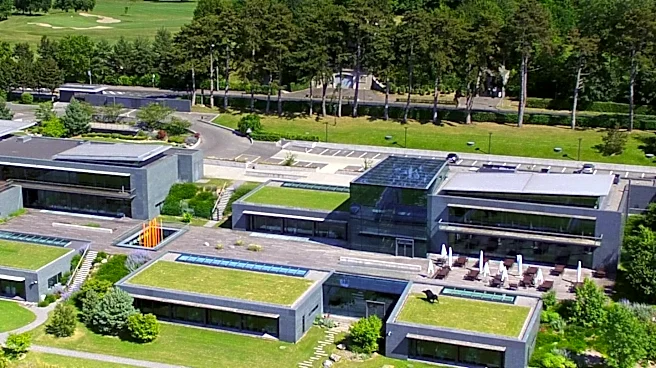
The Oak Ridge National Laboratory (ORNL) is pioneering the integration of autonomous science through its Facilities and Operations (F&O) workforce. This team is crucial in building and maintaining the infrastructure necessary for self-driving laboratories,
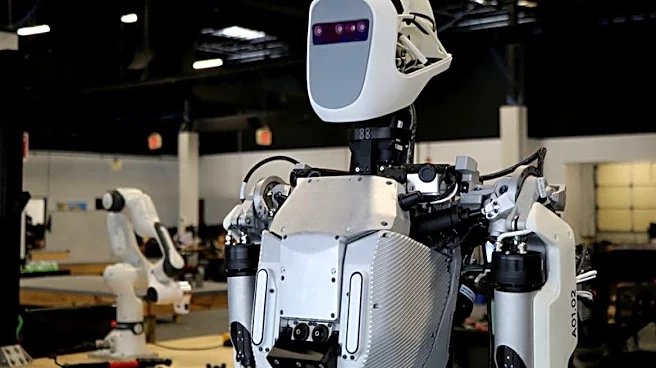
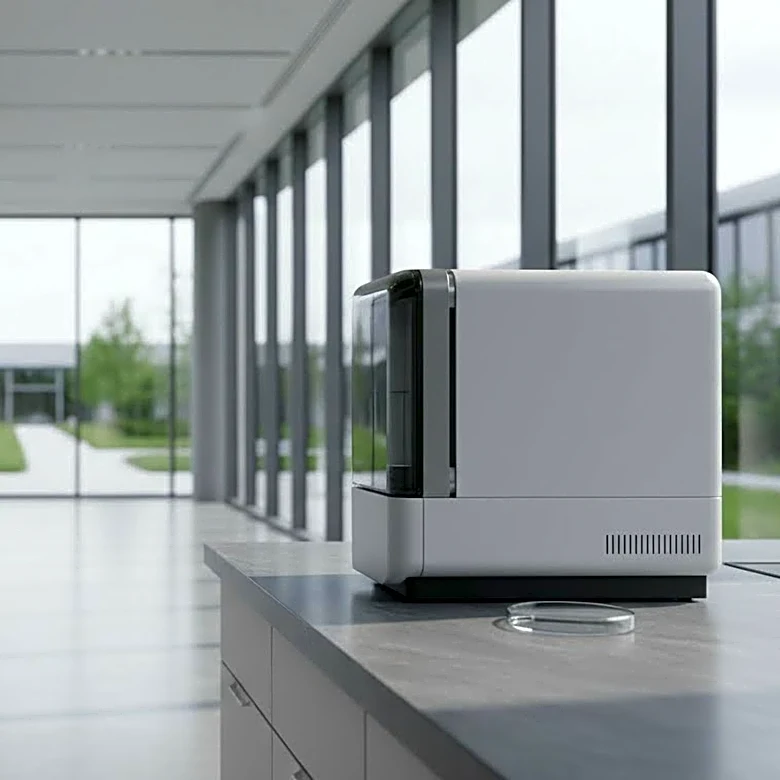
which operate with minimal human intervention. These labs utilize robotics, sensors, and automation to conduct experiments, with artificial intelligence playing a key role in decision-making processes. ORNL is among the first research institutions globally to implement this autonomous laboratory model at scale. The F&O workforce, comprising skilled trade professionals, engineers, and support personnel, collaborates closely with researchers to design, operate, and maintain these advanced facilities. Their efforts ensure the seamless operation of more than a dozen self-driving labs at ORNL, transforming how scientific research is conducted.
Why It's Important?
The development of autonomous laboratories at ORNL represents a significant shift in scientific research methodologies. By embedding artificial intelligence into scientific workflows, ORNL is not only enhancing the efficiency and accuracy of experiments but also redefining the roles of operations staff in research settings. This transformation has broader implications for the scientific community, potentially setting new standards for laboratory operations worldwide. The collaboration between operations and research teams at ORNL exemplifies a model that could be adopted by other institutions, leading to more innovative and efficient research processes. This advancement also highlights the growing importance of interdisciplinary collaboration in scientific research, where technical and operational expertise are equally valued.
What's Next?
As ORNL continues to refine its autonomous laboratory model, the focus will likely be on expanding the capabilities of these labs and further integrating AI into scientific processes. This could involve developing new technologies and methodologies to enhance the labs' functionality and efficiency. Additionally, ORNL may serve as a model for other research institutions looking to adopt similar autonomous systems, potentially leading to widespread changes in how scientific research is conducted globally. The ongoing collaboration between operations and research teams will be crucial in navigating the challenges and opportunities presented by this new era of autonomous science.