





What's Happening?
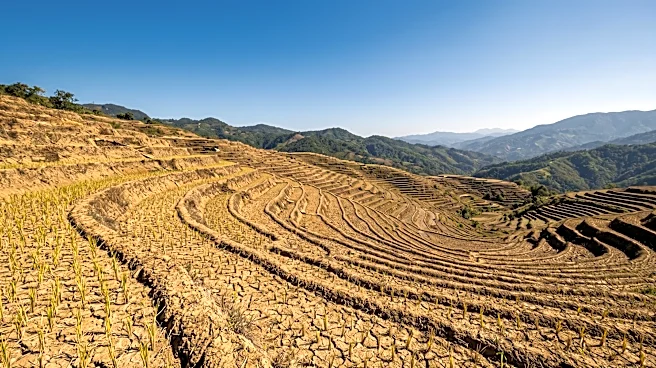
The Foreign Agricultural Service (FAS) of the U.S. Department of Agriculture has reported a projected decrease in milled rice production in the Philippines for 2026-27. This decline is attributed to the impact of a moderate to strong El Niño weather pattern
and elevated fertilizer costs, which have discouraged planting. Milled rice production is estimated at 12.25 million tonnes, a reduction from 12.36 million tonnes in the previous year. Despite government programs like the National Rice Program (NRP) and the Rice Competitiveness Enhancement Fund (RCEF) aimed at supporting rice cultivation, the combined environmental and economic pressures have led to this shortfall. The FAS also forecasts that rice consumption in 2026-27 will reach 17.65 million tonnes, driven by population demand, necessitating imports of 5.2 million tonnes to cover the production gap. Corn production estimates have also been lowered to 8.05 million tonnes due to similar irrigation risks, with imports expected to rise sharply to 2.9 million tonnes to meet feed sector demand.
Why It's Important?
This report from the U.S. Department of Agriculture highlights the significant vulnerability of global food supplies to climate phenomena and economic factors, particularly in key agricultural regions. For the U.S., while not directly impacting domestic rice production, it underscores the interconnectedness of international agricultural markets. A reduction in rice output from a major producer like the Philippines could lead to increased global rice prices, potentially affecting U.S. consumers and food aid programs. Furthermore, the reliance on imports to offset production shortfalls in the Philippines could create opportunities or challenges for U.S. agricultural exporters, depending on their competitive position in the global market. The situation also emphasizes the broader implications of climate change and rising input costs on food security, which can have geopolitical ramifications and influence U.S. foreign policy and aid strategies in affected regions. The exploration of corn as an ethanol feedstock by the Philippine Department of Agriculture and Department of Energy also indicates a potential shift in agricultural priorities that could impact global commodity markets.
What's Next?
The Philippines is expected to increase rice imports to 5.2 million tonnes to address the anticipated production shortfall in 2026-27, driven by continued population demand. Corn imports are also projected to rise sharply to 2.9 million tonnes to meet the growing demand from the feed sector. A proposed corn import quota expansion is currently under review, which could further influence trade dynamics. Additionally, the Philippine Department of Agriculture and Department of Energy are exploring the use of corn as an ethanol feedstock, a development that could alter domestic agricultural land use and commodity prices. These measures indicate a proactive approach by the Philippine government to mitigate the effects of reduced agricultural output and ensure food security, while also exploring alternative uses for agricultural products. The ongoing impact of El Niño and fertilizer costs will continue to be monitored, as they could further influence future planting decisions and crop yields.
Beyond the Headlines
The situation in the Philippines extends beyond immediate agricultural output, revealing deeper implications for food sovereignty and economic stability in developing nations. The reliance on imports to cover domestic shortfalls can strain national budgets and expose countries to global price volatility, potentially exacerbating food insecurity for vulnerable populations. This scenario also underscores the critical role of government support programs, such as the National Rice Program and the Rice Competitiveness Enhancement Fund, in buffering farmers against adverse conditions. However, the effectiveness of such programs can be challenged by severe climate events and persistent economic pressures. The exploration of corn for ethanol production introduces a complex dynamic, potentially diverting food crops for energy use, which could have ethical implications regarding food versus fuel debates. This highlights the broader challenge of balancing economic development, energy independence, and food security in the face of environmental and market pressures, a challenge that resonates globally and informs international development policies.