





What's Happening?
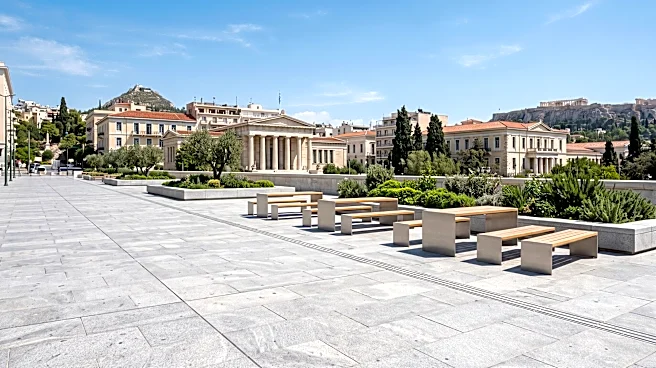
Athens, Greece, will host the Energy Cities Annual Forum from April 14-16, 2027. The forum will bring together urban practitioners and members to discuss strategies for building fair, resilient, and liveable cities. A key focus of the event will be the challenge
of overtourism and its impact on local well-being, alongside other critical issues such as affordable housing, energy democracy, and climate adaptation. The Mayor of Athens, Haris Doukas, emphasized the need for human-centered solutions that address everyday realities, including managing tourism to support the local economy without overburdening neighborhoods, public spaces, and residents' quality of life. The forum aims to highlight innovative responses from grassroots movements and local communities, particularly in the Mediterranean, Southern, and Eastern Europe, to foster a just transition that is shaped with the people it serves.
Why It's Important?
The Energy Cities Annual Forum in Athens is significant because it directly addresses interconnected urban challenges that are increasingly relevant to cities worldwide, including those in the U.S. The inclusion of overtourism as a key discussion point underscores its growing impact on urban sustainability and resident quality of life. For U.S. cities, which also grapple with tourism pressures in popular destinations, the insights and solutions discussed in Athens could offer valuable lessons. The forum's emphasis on affordable housing, energy democracy, and climate adaptation reflects a holistic approach to urban planning that prioritizes social equity and environmental resilience. These pillars are crucial for ensuring that urban development benefits all residents, not just tourists or specific economic sectors. The discussions will explore how cities can repurpose vacant spaces, promote community energy projects, and prepare for changing climate conditions, all of which have direct parallels to challenges faced by U.S. municipalities.
What's Next?
The Athens forum in April 2027 will serve as a platform for sharing experiences and developing collaborative solutions. Participants will explore practical strategies for reactivating and repurposing vacant spaces, improving housing conditions, and making energy more local, democratic, and affordable. Discussions on climate adaptation will focus on preparing cities for extreme weather events and ensuring urban liveability for everyone. The outcomes of these discussions could lead to the development of new urban policies, pilot projects, and international collaborations aimed at creating more sustainable and equitable cities. For U.S. stakeholders, monitoring the forum's proceedings and outcomes will be crucial for identifying best practices and innovative approaches that can be adapted to their own urban contexts. The event is expected to foster a deeper understanding of how interconnected issues like tourism, housing, and climate change can be addressed through integrated, human-centered strategies.
Beyond the Headlines
The Athens forum's focus on 'Rebuilding liveable places' and the interconnectedness of urban challenges highlights a fundamental shift in urban planning philosophy. It moves beyond siloed approaches to recognize that issues like overtourism, housing affordability, and climate resilience are deeply intertwined and require integrated solutions. This perspective is particularly relevant for U.S. cities, where rapid urbanization and climate impacts are creating complex challenges. The forum's emphasis on grassroots initiatives and community-led solutions suggests a growing recognition of the importance of local engagement and bottom-up approaches in achieving sustainable urban development. This could inspire U.S. cities to empower local communities and foster social innovation in addressing their own urban problems. Ultimately, the discussions in Athens could contribute to a broader global movement towards creating cities that are not only economically vibrant but also socially just, environmentally sustainable, and truly liveable for all residents.