




What's Happening?
The closure of the Strait of Hormuz due to the Iran war on February 28, 2026, has significantly disrupted global fertilizer trade. This strategic chokepoint, crucial for the export of fertilizers like urea and diammonium phosphate (DAP), has led to a substantial
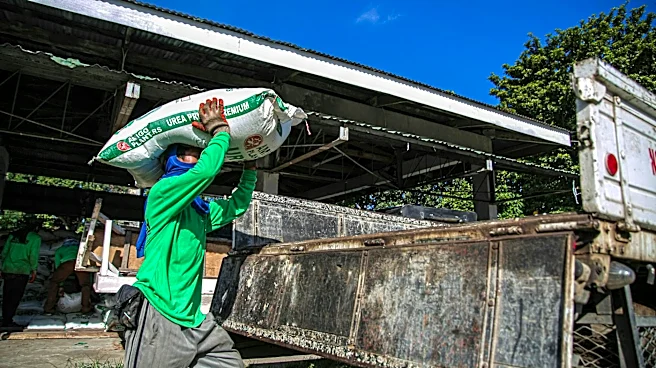
supply shock. The Gulf region, including Iran, Qatar, and Saudi Arabia, which collectively account for a significant portion of global urea and DAP exports, has been unable to ship approximately 21 million metric tons of urea and 4 million metric tons of DAP. This disruption has caused global fertilizer prices to soar, with urea prices doubling and DAP prices increasing by 35% as of April 2026. The situation is further complicated by the export and import policies of major fertilizer-producing and consuming countries, which are influencing global supply and demand dynamics.
Why It's Important?
The closure of the Strait of Hormuz and the resulting fertilizer supply shock have profound implications for global agriculture and food security. Fertilizer is a critical input for crop production, and its scarcity can lead to reduced agricultural yields and increased food prices. Countries that rely heavily on fertilizer imports, such as India and Pakistan, are particularly vulnerable. These nations often implement subsidy schemes to shield their farmers from global price fluctuations, which can exacerbate global supply constraints. The situation underscores the interconnectedness of global trade and the potential for geopolitical events to disrupt essential supply chains. The ongoing crisis highlights the need for diversified supply sources and resilient agricultural practices to mitigate the impact of such disruptions.
What's Next?
The future trajectory of global fertilizer prices will largely depend on the policy decisions of major exporting and importing countries. If countries like China, Russia, Egypt, and Indonesia relax their export restrictions, it could alleviate some of the supply pressures and stabilize prices. Conversely, if these nations tighten restrictions further, prices could escalate. Additionally, the continuation of subsidy policies in major importing countries will influence global demand dynamics. The resolution of the conflict in the Strait of Hormuz and the reopening of trade routes will be critical in restoring normalcy to the fertilizer market. Stakeholders in the agricultural sector will need to closely monitor these developments and adapt their strategies accordingly.
Beyond the Headlines
The current fertilizer crisis also raises questions about the sustainability of global agricultural practices. The reliance on chemical fertilizers has long been criticized for its environmental impact, including soil degradation and water pollution. The price surge could incentivize more sustainable practices, such as precision agriculture and the use of organic fertilizers. Additionally, the crisis highlights the geopolitical risks associated with concentrated supply chains and the importance of developing alternative routes and sources. Long-term, this disruption could accelerate the transition towards more resilient and sustainable agricultural systems.