
What's Happening?
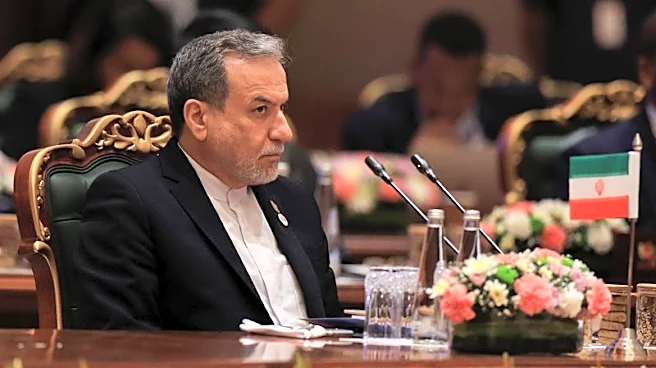
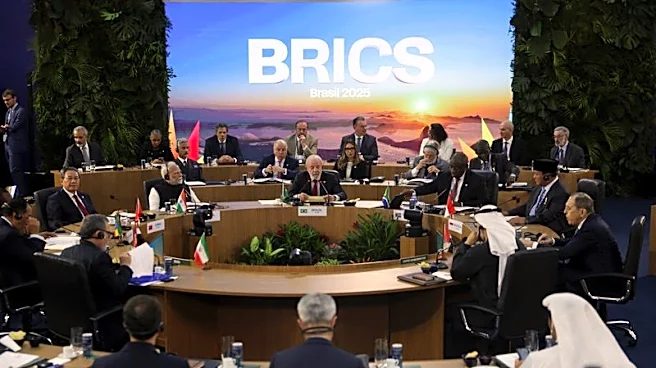
The BRICS summit in New Delhi became a platform for Iran and the United Arab Emirates (UAE) to exchange accusations amid escalating tensions. Iran accused the UAE of siding with the U.S. and Israel in a regional
conflict, while the UAE rejected these claims, asserting its right to defend its sovereignty. The summit, intended to promote unity among emerging economies, ended without a joint statement due to divisions over Middle Eastern issues. The UAE has faced numerous missile and drone attacks from Iran, and the situation has strained relations within the BRICS group, which includes major developing economies.
Why It's Important?
The tensions between Iran and the UAE at the BRICS summit highlight the geopolitical complexities in the Middle East and the challenges of maintaining unity within international coalitions like BRICS. The accusations reflect broader regional conflicts and the influence of external powers, such as the U.S. and Israel, in shaping alliances and hostilities. The situation underscores the importance of diplomacy and dialogue in resolving conflicts and maintaining regional stability. The outcome of these tensions could affect international trade, security, and diplomatic relations, influencing global economic and political dynamics.
What's Next?
The ongoing tensions may lead to further diplomatic efforts to resolve the conflict and prevent escalation. BRICS members may need to engage in dialogue to address the divisions and promote cooperation. The situation could also prompt international mediation efforts to de-escalate tensions and foster regional stability. The outcome may influence future BRICS summits and the group's ability to address global challenges collectively.