






What's Happening?
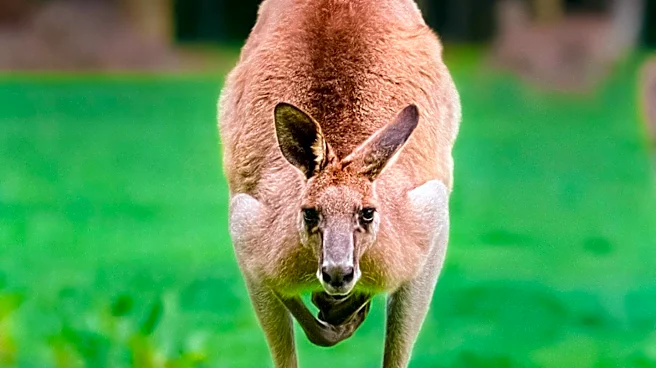
Police in Marshall, Missouri, successfully captured a kangaroo that had escaped from a petting zoo at the Saline County Fairgrounds. The incident occurred on October 3, when a child inadvertently left a gate open, allowing the kangaroo to flee its enclosure.
The following day, a good Samaritan spotted the marsupial and alerted authorities. Another individual with experience handling exotic animals assisted the Marshall Missouri Police Department in safely apprehending the kangaroo. The animal was subsequently returned to its owners, who reside in Warrensburg. The event prompted local discussion regarding the legality of owning kangaroos as pets in Missouri. While the state prohibits dangerous exotic animals like big cats, wolves, and bears, kangaroos are not explicitly listed under these restricted categories, though local regulations may vary.
Why It's Important?
This incident highlights the challenges and potential public safety concerns associated with exotic animals, even those not typically considered dangerous, escaping into residential or public areas. While the kangaroo was safely returned without incident, such occurrences can pose risks to both the animal and the community, including traffic hazards or unexpected encounters with residents. The event also brings attention to the varying regulations concerning exotic pet ownership across different jurisdictions. In Missouri, the lack of specific prohibition for kangaroos contrasts with stricter rules for other exotic species, creating a regulatory gray area that can lead to situations like this. For petting zoo operators, it underscores the critical importance of stringent security measures and public awareness regarding animal enclosures to prevent escapes and ensure the safety of both animals and visitors.
What's Next?
Following this incident, it is possible that local authorities or state legislators in Missouri may review existing regulations concerning exotic animal ownership and petting zoo operations. This could lead to discussions about whether kangaroos should be added to the list of regulated or prohibited animals, or if stricter guidelines are needed for their containment in public exhibitions. Petting zoo operators in the region might also face increased scrutiny regarding their safety protocols, potentially prompting them to reinforce enclosures and staff training. For the public, the event serves as a reminder of the unpredictable nature of exotic animals and the importance of reporting sightings to local authorities. It may also spark broader conversations about the ethics and practicalities of keeping non-native species in captivity, particularly in settings accessible to the public.
Beyond the Headlines
Beyond the immediate capture, this event touches on broader themes of human-animal interaction and the evolving landscape of exotic pet ownership. The increasing popularity of petting zoos and private ownership of non-traditional pets raises questions about animal welfare, public safety, and ecological impact. While kangaroos may seem benign, their presence in an unfamiliar environment can cause stress to the animal and potential disruption to local ecosystems if they were to establish a wild population. The incident also subtly highlights the role of community vigilance and cooperation between citizens and law enforcement in managing unexpected situations involving wildlife. It underscores the need for clear, comprehensive regulations that balance the interests of animal owners, public safety, and animal welfare, ensuring that such unique encounters remain rare and are handled effectively when they do occur.