




What's Happening?
Roche is expanding its next-generation sequencing (NGS) initiatives in the Asia Pacific region following the global introduction of its AXELIOS 1 platform in June 2026. Building on initial adoption in South Korea, Roche plans to bring this advanced technology
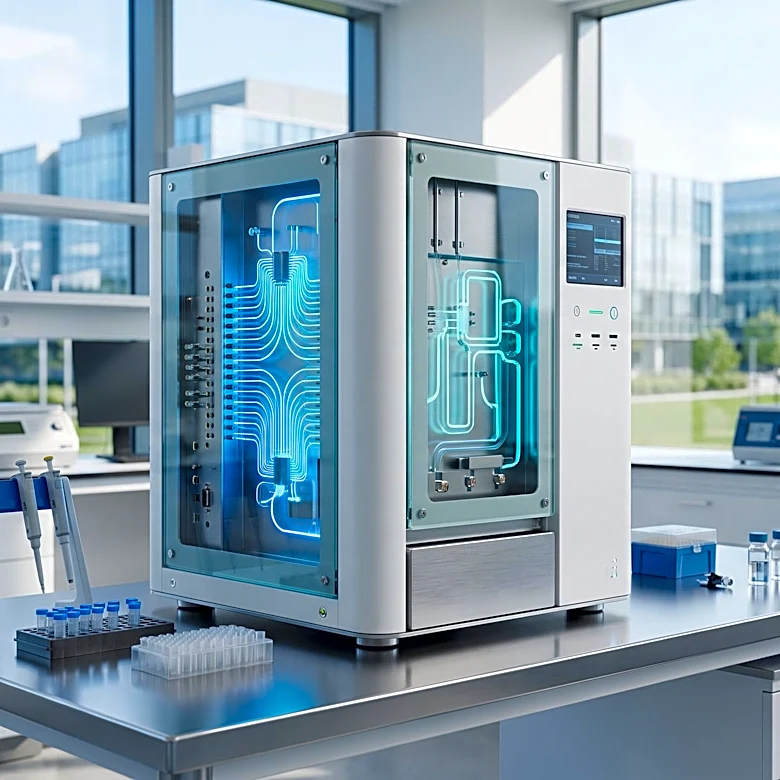
closer to researchers and laboratory leaders through 'AXELIOS Days' events scheduled for November in Sydney, Australia, and Seoul, South Korea. The AXELIOS 1 platform utilizes Roche's proprietary sequencing by expansion (SBX) technology, which is designed to offer flexibility and high performance across various sequencing workflows. This technology converts genetic information into synthetic molecules called Xpandomers, which are approximately 50 times longer than original DNA fragments, enhancing sequencing accuracy. The platform also boasts high-speed processing, capable of completing sequencing runs in approximately 15 minutes to four hours and generating at least 1.8 terabases in a four-hour run, with the potential for same-day whole-genome sequencing results. The NGS market in the Asia Pacific region is projected to more than double from US$3.4 billion in 2025 to US$7.38 billion by 2030.
Why It's Important?
While this news primarily focuses on the Asia Pacific market, Roche's global launch of AXELIOS 1 and its proprietary SBX technology has significant implications for the U.S. biotechnology and healthcare sectors. As a major player in diagnostics and pharmaceuticals, Roche's advancements in NGS technology set new benchmarks for speed, accuracy, and scalability in genomic research. This innovation could influence research methodologies and clinical applications globally, including in the U.S. The ability to achieve same-day whole-genome sequencing results could revolutionize critical care settings and accelerate diagnostic processes for complex diseases, impacting U.S. hospitals and research institutions. Furthermore, the development of such high-throughput, flexible platforms could drive down overall sequencing costs and increase accessibility, fostering greater adoption of genomic medicine in the U.S. The competitive landscape in the U.S. market, which includes companies like Illumina and 10x Genomics, will likely be spurred by these technological advancements, leading to further innovation and improved offerings for U.S. consumers and researchers.
What's Next?
Roche's focus on expanding its NGS technology in the Asia Pacific region suggests a strategic move to capture a rapidly growing market, but it also signals the company's broader global ambitions for AXELIOS 1. Following the 'AXELIOS Days' in Sydney and Seoul, Roche will likely continue to promote the platform's capabilities and seek further adoption in other key markets, including the U.S. The company will offer library prep kits and an open-source bioinformatics analysis suite (XOOS) tailored for SBX technology, aiming to facilitate integration into existing research workflows. Future developments may include expanding the platform's applications beyond research use to diagnostic procedures, pending regulatory approvals. The competitive pressure from this advanced technology could also prompt other major U.S. and international genomics companies to accelerate their own research and development efforts, leading to a new wave of innovation in sequencing technologies and applications.
Beyond the Headlines
The introduction of technologies like AXELIOS 1, capable of rapid and highly accurate whole-genome sequencing, carries profound ethical and societal implications. The increased speed and accessibility of genomic data could accelerate the development of personalized medicine, offering tailored treatments based on an individual's genetic makeup. However, this also intensifies discussions around data privacy, genetic discrimination, and equitable access to advanced genomic technologies. As sequencing becomes faster and cheaper, the ethical considerations surrounding genetic screening, particularly for predispositions to diseases, will become more prominent. Culturally, a deeper understanding of human genetics could reshape our perceptions of health, disease, and even identity. The long-term impact could be a healthcare system that is not only more precise but also more proactive, potentially shifting the focus from treating illnesses to preventing them, thereby transforming public health strategies and individual health management.