



What's Happening?
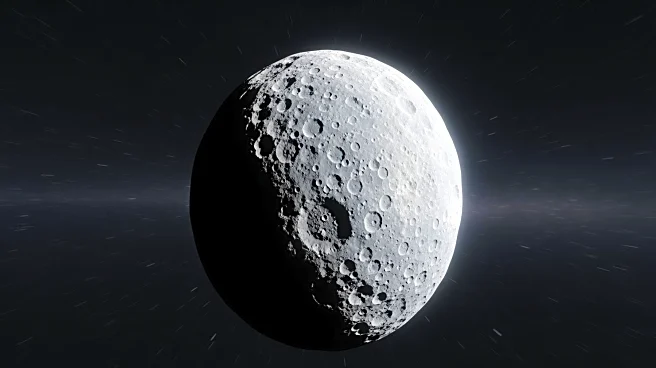
Astronomers have discovered a 710-meter-wide asteroid that spins once every 1.9 minutes, making it the fastest-rotating large asteroid ever observed. This discovery was made by the Vera C. Rubin Observatory in Chile. The asteroid's rapid rotation suggests
it is composed of solid rock or metal, rather than a loose 'rubble pile' structure. This finding challenges previous assumptions about the structural limits of asteroids and opens new avenues for research into their composition and behavior.
Why It's Important?
The discovery of this fast-rotating asteroid provides valuable insights into the diversity and physical properties of asteroids. Understanding the composition and behavior of such celestial bodies is crucial for assessing potential threats to Earth and developing strategies for asteroid deflection. This research also contributes to our broader understanding of the solar system's formation and evolution. The findings may have implications for future space missions and the study of other fast-rotating asteroids.
What's Next?
The Vera C. Rubin Observatory will continue its survey of the southern sky, potentially identifying more fast-rotating asteroids. This ongoing research will help astronomers refine models of asteroid composition and behavior. Future studies may focus on the potential for mining asteroids for valuable resources, as well as developing technologies to mitigate the risk of asteroid impacts on Earth. The discovery highlights the importance of continued investment in astronomical research and observation.