





What's Happening?
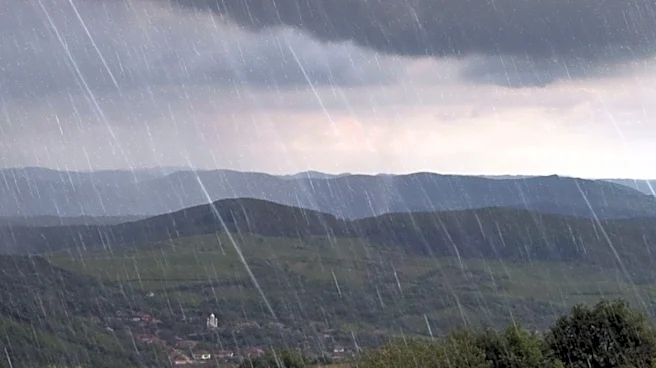
Monsoon activity has intensified across Madhya Pradesh, with the state experiencing a resurgence of rainfall. Over the past 24 hours, several parts of the state recorded significant rainfall, and the India Meteorological Department (IMD) forecasts continued
rain for the next 24 hours. Heavy rain warnings have been issued for 13 districts, including Gwalior, Chhatarpur, Vidisha, Guna, Ashoknagar, Shivpuri, Datia, Bhind, Morena, Sheopur, Singrauli, Sidhi, Rewa, Mauganj, Satna, Panna, Damoh, Sagar, Tikamgarh, and Niwari. These districts are expected to experience heavy rainfall accompanied by thunder and strong winds. The monsoon trough is currently passing through Satna in Madhya Pradesh, and another trough extends from South Gujarat to North Bengal, contributing to the increased rainfall and thunderstorms. Ghati Gaon in Gwalior recorded the highest rainfall in the last 24 hours, with 81.4 mm (over 3 inches).
Why It's Important?
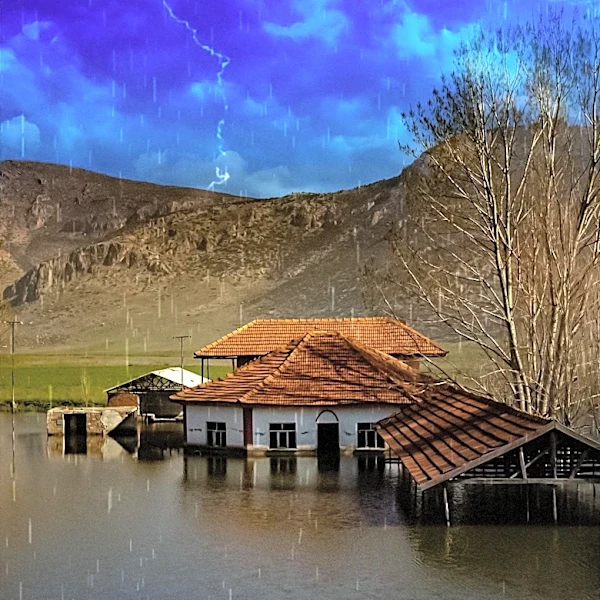
The renewed intensity of monsoon activity in Madhya Pradesh carries significant implications for the region's agriculture, infrastructure, and public safety. Heavy rainfall can lead to localized flooding, disrupting daily life, damaging roads, and potentially isolating communities. For the agricultural sector, which is heavily reliant on monsoon rains, excessive precipitation can be a double-edged sword; while it replenishes water sources, it can also cause crop damage due to waterlogging, especially if drainage systems are inadequate. The warnings for thunder and strong winds also pose risks to property and human safety, including potential power outages and tree falls. The IMD's advisory for people to stay away from open areas, trees, and electric poles during adverse weather underscores the immediate dangers. The impact on urban areas, such as Gwalior, could include traffic disruptions and water accumulation in low-lying areas.
What's Next?
The India Meteorological Department has issued warnings for continued rain and thunderstorms across many districts of Madhya Pradesh for the next 24 hours. Residents in the affected districts, particularly Gwalior-Chambal and Bundelkhand regions, are advised to take precautions against heavy rain, thunder, and strong winds. Authorities will likely monitor water levels in rivers and reservoirs and may issue further advisories or evacuation orders if conditions worsen. Farmers are advised to take measures to protect their crops from waterlogging. Emergency services will remain on high alert to respond to any incidents of flooding, power outages, or other weather-related emergencies. The monsoon system is expected to continue influencing the state, with the cyclonic circulation extending up to 5.8 kilometers above sea level, indicating sustained weather activity.
Beyond the Headlines
The recurring heavy monsoon activity in Madhya Pradesh highlights broader challenges related to climate variability and urban planning. The intensity and distribution of rainfall can significantly impact regional water management strategies, including flood control and water conservation efforts. Long-term implications include the need for improved drainage infrastructure in urban and rural areas to mitigate the effects of flash floods. Furthermore, the agricultural sector may need to adapt to more unpredictable rainfall patterns, potentially requiring shifts in crop selection or irrigation techniques. The emphasis on public safety during severe weather events also underscores the importance of community awareness programs and robust disaster response mechanisms. The continuous monitoring of monsoon troughs and cyclonic circulations by meteorological departments is crucial for providing timely warnings and enabling proactive measures to protect lives and livelihoods.