



What's Happening?
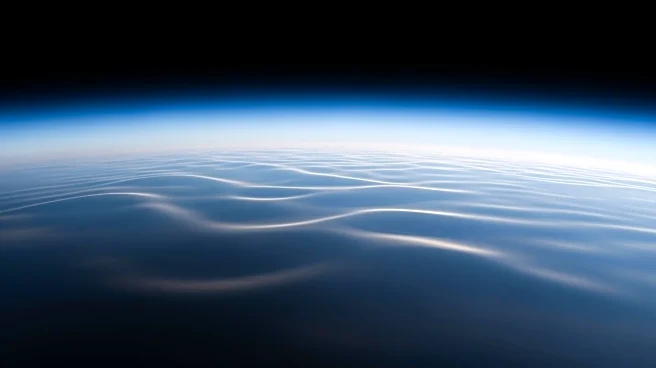
NASA's International Space Station (ISS) has detected a previously unknown atmospheric phenomenon approximately 55 miles above Earth. This discovery was made during Hurricane Helene, which impacted the Florida coast with severe weather. The Atmospheric
Wave Instrument (AWE) on the ISS observed 'atmospheric waves' in the mesosphere, a layer of the atmosphere that can be influenced by ground-based weather events. These waves, invisible from the ground, were detected as ripples in the atmosphere, indicating a connection between surface storms and upper atmospheric conditions. The AWE, installed in 2023, is designed to observe atmospheric glow and has now provided insights into how hurricanes can affect atmospheric layers far above the Earth's surface.
Why It's Important?
The detection of atmospheric waves by the ISS is significant as it enhances understanding of how severe weather events on Earth can influence the upper atmosphere. This knowledge is crucial for satellite operations, as changes in atmospheric conditions can affect satellite trajectories and communications. The ability to monitor these waves helps in predicting potential disruptions to satellite systems, which are vital for global communications, weather forecasting, and navigation. The findings from the AWE instrument contribute to a broader understanding of atmospheric dynamics and can improve the resilience of space-based technologies against weather-induced anomalies.
What's Next?
NASA plans to continue using the AWE instrument to monitor atmospheric waves during various storm events. This ongoing research will help build a comprehensive understanding of the interactions between Earth's surface weather and the upper atmosphere. The data collected will be used to refine models that predict atmospheric behavior, potentially leading to improved satellite management and communication systems. As more storms are observed, the insights gained could lead to advancements in mitigating the impacts of atmospheric disturbances on space technology.
Beyond the Headlines
The discovery of atmospheric waves highlights the interconnectedness of Earth's weather systems and the space environment. This research underscores the importance of monitoring atmospheric conditions not just for weather prediction but also for maintaining the integrity of space-based infrastructure. The ability to detect and analyze these waves could lead to new strategies for protecting satellites from unexpected atmospheric changes, ensuring the reliability of critical services that depend on space technology.