
What's Happening?
The federal government is arguing in court that the construction of a new ballroom at the White House cannot be stopped by judicial intervention due to its ongoing status and the sensitive security concerns
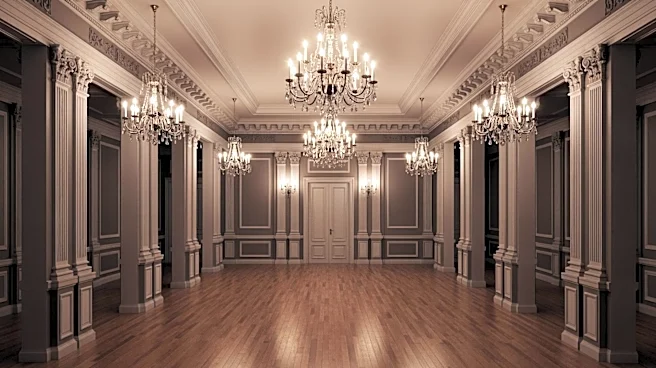
it addresses. Attorney Yaakov Roth, representing the government, stated that only Congress has the authority to halt the $400 million project. This argument was presented during a hearing with U.S. Appeals Court Judge Patricia Millett. The project, which includes a 90,000-square-foot ballroom, was ordered to stop aboveground by U.S. District Judge Richard Leon, although underground work on a bunker and other security facilities was allowed to continue. The National Trust for Historic Preservation has challenged the project, arguing that Congress should have a say in such developments. The hearing focused on the legal standing to challenge government actions and whether national security concerns override such challenges.
Why It's Important?
This case highlights the tension between national security priorities and legal oversight in government projects. The outcome could set a precedent for how similar projects are handled in the future, particularly those involving significant alterations to historic sites like the White House. The government's stance emphasizes the importance of security upgrades in response to modern threats, which could influence future infrastructure projects. Conversely, the challenge by the National Trust for Historic Preservation underscores the importance of maintaining legal checks on executive actions, especially when they involve historic properties. The decision could impact how government projects are initiated and approved, potentially affecting public policy and the balance of power between branches of government.
What's Next?
The U.S. Court of Appeals for the District of Columbia Circuit has yet to make a decision following the hearing. If the court rules in favor of the government, construction will likely proceed without further legal obstacles, reinforcing the administration's ability to prioritize security over other considerations. However, if the court sides with the National Trust for Historic Preservation, it could lead to increased congressional oversight of similar projects. This decision could prompt legislative action to clarify the roles of different branches in approving and overseeing government construction projects, particularly those involving national security.