





What's Happening?
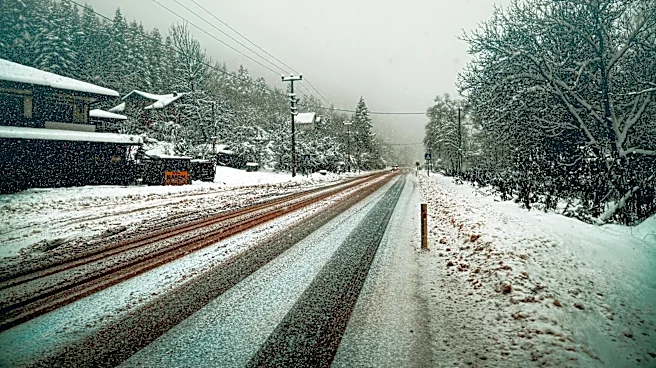
The National Weather Service (NWS) has issued heavy snow warnings across Alaska, with some areas expected to receive up to 18 inches of snow. The warnings are in effect for the Yukon Delta coast, the Kuskokwim Delta coast, and Nunivak Island, where snow accumulations
could range from three to eight inches, accompanied by wind gusts up to 45 miles per hour. These conditions are expected to create very difficult travel situations. The warnings are set from 10 a.m. Saturday to 10 a.m. AKDT Sunday. Additionally, winter weather advisories are in place for the eastern Alaska Range South of Trims Camp, the lower Kuskokwim Valley, and the interior Kuskokwim Delta, with snow accumulations expected to be between two and nine inches. A winter storm watch is also in effect for the eastern Alaska Range, predicting snow totals between 12 and 18 inches from Sunday morning through Monday afternoon.
Why It's Important?
The heavy snow warnings and advisories highlight the severe winter weather conditions that could significantly impact travel and daily life in affected areas of Alaska. Such weather events can disrupt transportation, leading to potential delays and hazards for residents and travelers. The warnings serve as a critical alert for communities to prepare for the impending weather, ensuring safety measures are in place. The broader impact includes potential economic disruptions, particularly in sectors reliant on transportation and logistics. Additionally, the freeze warnings across the central U.S. and Mountain West could affect agriculture and energy consumption, as lower temperatures may lead to increased heating demands.
What's Next?
The National Weather Service will continue to provide updates on the weather conditions through its website and social media channels. Residents in the affected areas are advised to stay informed and take necessary precautions to ensure safety during the storm. The ongoing weather advisories and warnings suggest that the region should prepare for continued winter weather challenges, with potential for further alerts if conditions worsen. Authorities may need to coordinate responses to ensure roads are cleared and emergency services are ready to assist those in need.