




What's Happening?
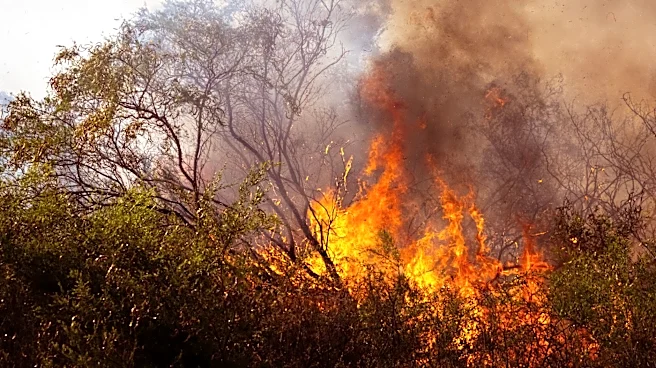
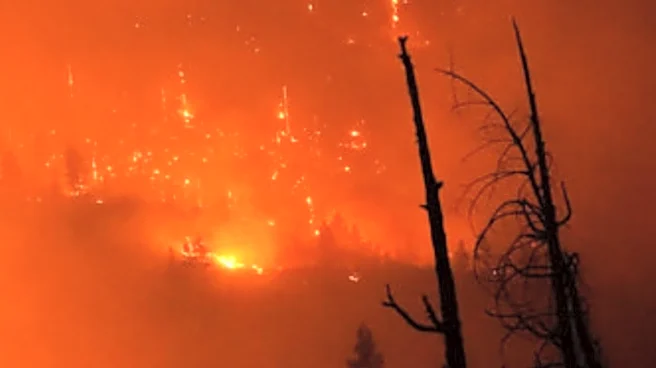
Nearly 100 million Americans are under active heat alerts as extreme temperatures and humidity affect large parts of the country. This comes as firefighters in southwest France battle a massive wildfire that has forced over 200,000 people to evacuate.
The fire, near Bordeaux, is part of a broader pattern of severe wildfires in Europe, exacerbated by climate conditions. In the U.S., the heat wave is causing temperatures to exceed 105 degrees in some areas, with warnings in effect from California to Mississippi. The extreme weather is linked to a heat dome, trapping hot air and leading to dangerous conditions.
Why It's Important?
The widespread heat alerts in the U.S. highlight the growing impact of climate change on weather patterns, with significant implications for public health and safety. The extreme temperatures pose risks to vulnerable populations, strain energy resources, and increase the likelihood of wildfires. The situation in Europe underscores the global nature of climate challenges, as countries grapple with the effects of rising temperatures and environmental emergencies. These events emphasize the need for coordinated efforts to address climate change and enhance resilience to extreme weather conditions.
What's Next?
As the heat wave continues, authorities in affected regions will need to implement measures to protect public health and manage energy demands. Emergency services may face increased pressure to respond to heat-related incidents and potential wildfires. In the longer term, policymakers and communities will need to prioritize climate adaptation strategies and invest in infrastructure to mitigate the impacts of extreme weather. International cooperation and policy initiatives will be crucial in addressing the root causes of climate change and supporting affected regions.