



What's Happening?
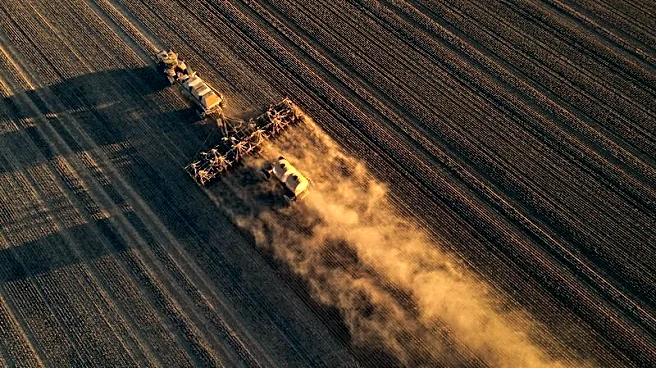
The U.S. Department of Agriculture (USDA) has suspended all new grant applications for the Renewable Energy for America Program (REAP) as of March 31, 2026. This decision comes during a period of significant volatility in the domestic agricultural sector,
which is facing challenges such as soaring diesel prices, a fertilizer supply crunch, and geopolitical tensions in the Middle East. The conflict involving Iran has led to the closure of the Strait of Hormuz, exacerbating the cost of farming for many family-owned operations. The suspension of REAP grants marks a shift in federal policy from supporting green energy initiatives to prioritizing immediate food security and fiscal consolidation.
Why It's Important?
The suspension of REAP grants is significant as it reflects a broader shift in U.S. energy policy, prioritizing energy dominance over green energy incentives. This move could deepen the U.S. farmer's dependence on volatile global oil markets, affecting long-term sustainability goals. The decision has created a rift with renewable energy partners and could lead to increased farm bankruptcies due to high input costs and the loss of energy-efficiency subsidies. The agricultural sector is now facing a 'survival of the fittest' scenario, with smaller operations potentially unable to compete with larger corporate farms.
What's Next?
The agricultural sector must navigate the 2026 harvest with high operating costs. Farmers may pivot towards retrofit technologies to upgrade older machinery rather than purchasing new equipment. The suspension of REAP grants could lead to industry consolidation, with smaller farms struggling to compete. The USDA may need to implement further measures, such as direct price controls or rationing, to ensure domestic food supply stability. The resolution of the Iran conflict and reopening of the Strait of Hormuz could provide relief, but the situation remains uncertain.
Beyond the Headlines
The halt of REAP grants is part of a broader trend towards re-shoring food and energy security. The agricultural sector's focus has shifted from carbon footprints to cost-per-bushel, echoing energy shocks of the 1970s. The suspension is seen as a test case for dismantling green energy incentives across the federal government, potentially affecting other agencies like the Department of Energy. Analysts predict a shift in acreage from corn to soybeans due to high nitrogen fertilizer costs, impacting global food markets.