




What's Happening?
The University of Oregon's Department of Geography is hosting a colloquium featuring Professor Mitchell Power, curator of the Garrett Herbarium and professor at the University of Utah. Professor Power will present on "Stories from the Mud: The Last Three
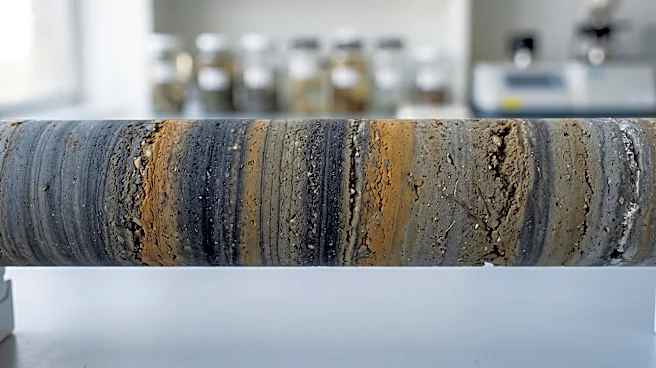
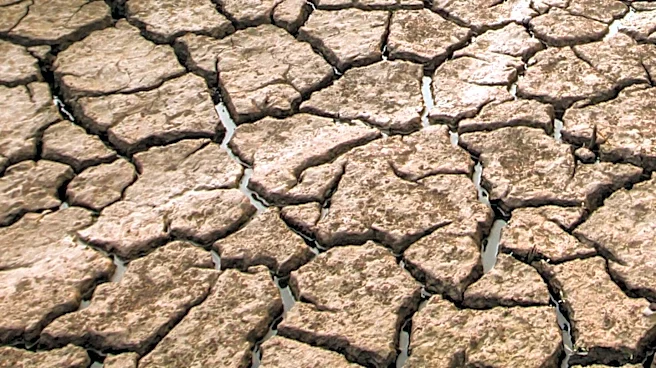
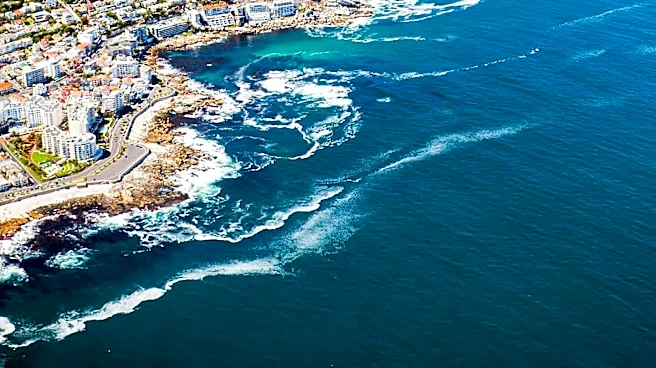
Millennia of Drought and Fire from Colombia and South Africa." His research utilizes lake sediment records to reconstruct past environmental changes, including wildfire activity, vegetation dynamics, and climate variability, extending beyond instrumental records. Over a decade of paleoecological fieldwork in Colombia and South Africa has allowed him to explore how sediment cores reveal shifts in fire regimes and ecosystem responses to drought, precipitation changes, and human land-use over several millennia. The presentation will delve into how regional climate variability, vegetation composition, fuel availability, and human activities interact to influence fire regimes, with a particular focus on extreme drought and large-scale climate patterns like El Niño–Southern Oscillation (ENSO), Atlantic Multi-decadal Oscillation (AMO), and changes to the Intertropical Convergence Zone (ITCZ).
Why It's Important?
This research is crucial for establishing long-term baselines for understanding natural fire variability and assessing ecosystem resilience, which has significant implications for environmental management and policy in the U.S. and globally. By integrating high-resolution fire histories with independent paleoclimate reconstructions and modern ecological observations, Professor Power's work helps differentiate between natural environmental fluctuations and human-induced impacts. This understanding is vital for developing effective strategies to mitigate the effects of climate change and manage natural resources. For U.S. policymakers and environmental scientists, insights from these long-term records can inform predictions about future drought and fire risks, especially as climate patterns continue to shift. The study of past climate events, such as the influence of ENSO, provides a broader context for understanding current and future climate challenges that affect various sectors, including agriculture, water resources, and public health.
What's Next?
The colloquium itself serves as a platform for knowledge dissemination and academic discussion, potentially fostering new collaborations and research directions within the scientific community. The findings presented by Professor Power could influence future paleoecological studies and climate modeling efforts. Continued research in this area will likely focus on refining these long-term environmental records and applying them to predictive models for climate change impacts. The insights gained from these studies can also inform conservation efforts and land management practices, both domestically and internationally, by providing a historical context for current ecological conditions. The ongoing analysis of climate patterns like ENSO and AMO will remain critical for understanding their global and regional effects, including their potential influence on U.S. weather and climate phenomena.
Beyond the Headlines
The deeper implications of this research extend to understanding the complex interplay between natural climate cycles and human activities in shaping landscapes over vast timescales. By examining millennia of environmental data, the study highlights the long-term consequences of both natural variability and human land-use on ecosystems. This historical perspective can challenge contemporary assumptions about 'normal' environmental conditions and underscore the profound impact of human civilization on the planet. Ethically, it prompts a re-evaluation of human responsibility in environmental stewardship, emphasizing the need for sustainable practices informed by a deep understanding of ecological history. Culturally, such research can foster a greater appreciation for the dynamic nature of Earth's systems and the interconnectedness of global environmental processes, influencing public perception and engagement with climate science.