




What's Happening?
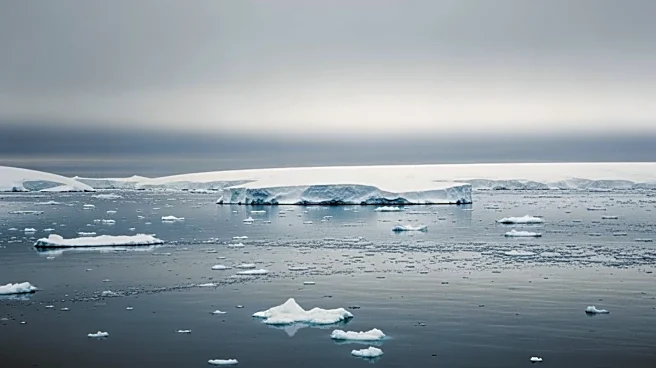
Researchers from the Alfred Wegener Institute (AWI) have discovered that a previously misidentified 'danger zone' in Antarctica is actually an island. This discovery was made during an expedition in the northwestern Weddell Sea aboard the AWI's icebreaker,
Polarstern. Initially, the team was studying the rapid decline of sea ice when they had to take shelter due to harsh weather conditions. It was during this pause that they noticed an 'iceberg' that appeared different, leading to the realization that it was an island. The island, which is approximately 426 feet long and 164 feet wide, protrudes about 52 feet out of the water. The area was previously marked as a danger zone on nautical charts, likely due to uncharted shoals on the seafloor. This marks the first time the region has been surveyed and recorded using echo sounders and drone imaging.
Why It's Important?
The discovery of this island is significant as it highlights the gaps in current nautical charts and the potential for further discoveries in the largely uncharted waters of Antarctica. With less than a quarter of the Weddell Sea fully charted, this finding underscores the need for more comprehensive mapping of the region. This could have implications for navigation safety and scientific research, as accurate maps are crucial for both. The discovery also emphasizes the dynamic nature of the Antarctic environment and the importance of continued exploration and study in understanding global climate patterns and changes.
What's Next?
The newly discovered island will undergo a formal naming process, with a proposal to be submitted to the Scientific Committee on Antarctic Research (SCAR). This process will ensure the island is officially recognized and included in future maps. The discovery may prompt further expeditions to explore and chart other uncharted areas in the Weddell Sea and beyond. Researchers and navigators may also push for improved satellite data and mapping technologies to better understand and document these remote regions.