



What's Happening?
The National Interagency Fire Center has elevated the National Fire Preparedness level to 5, the highest on the scale, due to the increasing number of wildfires and the strain on available resources. This marks the first time since late 2024 that the preparedness
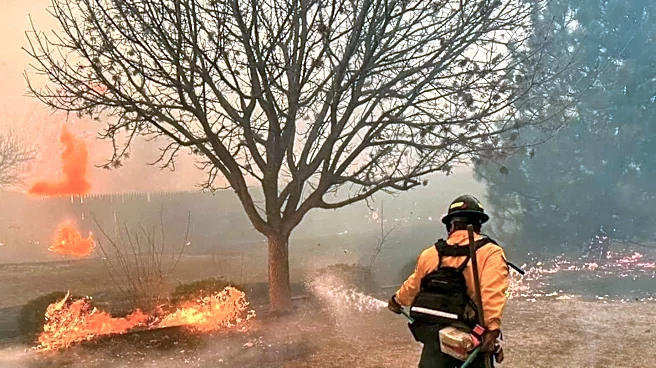
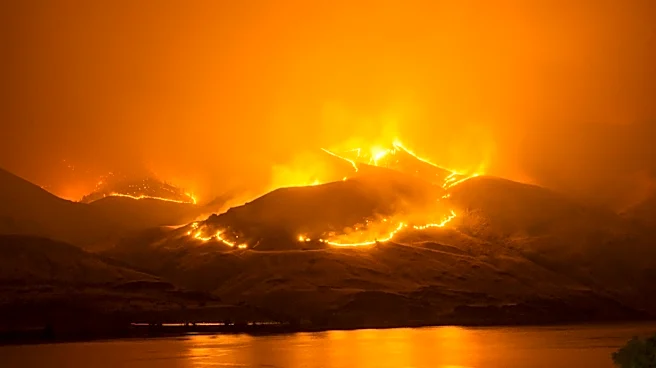
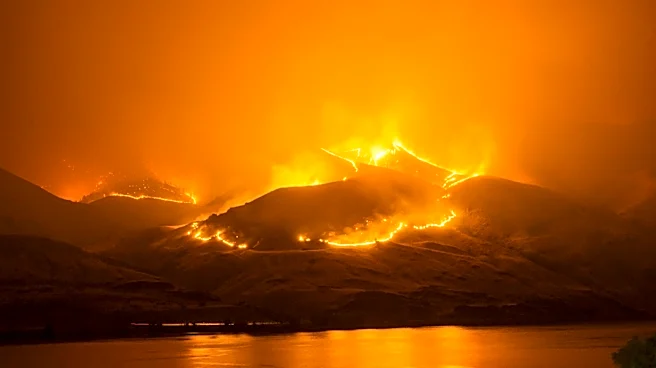
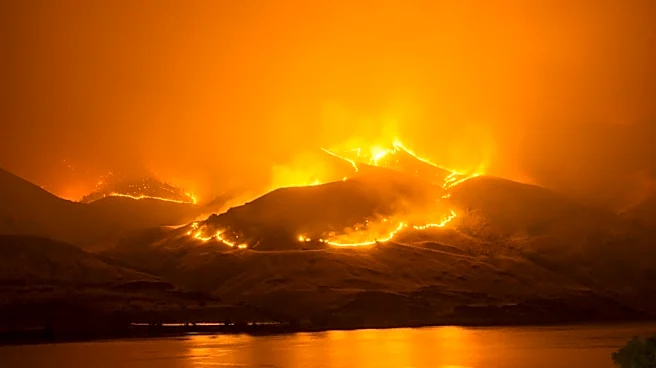
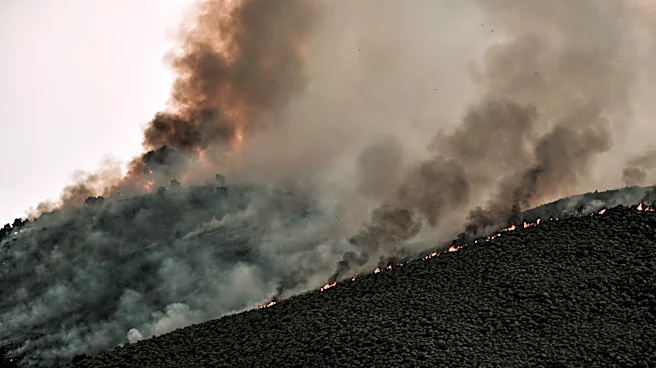
level has reached this peak. The Tarter Fire in Washington County, Idaho, is one of the significant fires contributing to this situation. The fire, which has spread to 12,208 acres, originated from embers carried across the Snake River from Oregon. Michael Davis, a public information officer with the Great Basin Incident Management Team 3, highlighted the challenges faced in securing resources, particularly air support, due to the competition among multiple fires in the region. The team is working to establish a solid perimeter around the fire, but weather conditions, including high winds, pose a significant threat to containment efforts.
Why It's Important?
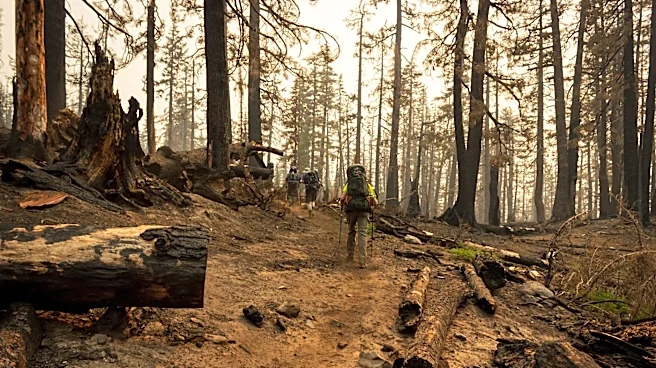
The elevation of the preparedness level to 5 underscores the critical state of wildfire management resources in the U.S. With numerous fires burning across Oregon and Idaho, the demand for firefighting resources, such as air support and personnel, has intensified. This situation highlights the logistical challenges faced by fire management teams in allocating limited resources effectively. The competition for resources can impact the ability to control and contain fires, potentially leading to greater environmental and economic damage. Communities in affected areas face increased risks, and the strain on resources could delay response times, exacerbating the impact of the fires.
What's Next?
As the Tarter Fire and other wildfires continue to burn, fire management teams will need to prioritize resource allocation based on the severity and potential impact of each fire. The National Multi-Agency Coordinating Center will play a crucial role in determining where resources are most needed. Weather conditions, particularly high winds, will be closely monitored as they could influence fire behavior and containment efforts. The ongoing strain on resources may prompt discussions on improving resource management and preparedness strategies for future wildfire seasons.