








What's Happening?
Six years after the murder of George Floyd, the United States has seen significant changes in public safety strategies, with a notable decline in violent crime across many communities. This shift was largely driven by investments in community-based safety programs,
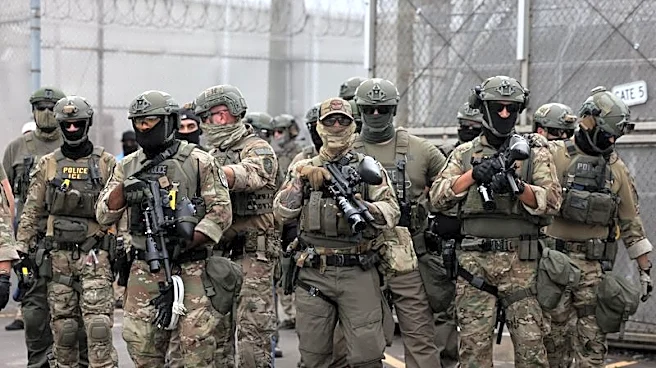
funded through federal COVID-19 recovery dollars and local spending. These programs included violence interruption initiatives, behavioral health response teams, and youth outreach efforts, which complemented traditional policing methods. However, as pandemic-era funding expires, there is a growing concern that these gains may be reversed. Policymakers are redirecting resources back to traditional enforcement methods, potentially undermining the progress made in creating safer communities.
Why It's Important?
The potential rollback of community-based safety programs could have significant implications for public safety in the U.S. These programs have been instrumental in reducing crime rates by addressing root causes such as addiction, mental illness, and poverty. The shift back to enforcement-first strategies may not only reverse these gains but also strain police resources, as officers are often called to handle social issues they are not equipped to manage. This could lead to increased violence and negative outcomes in communities. The situation highlights the need for a balanced approach to public safety that includes both policing and community support systems.
What's Next?
As federal and local governments reconsider their funding priorities, the future of community-based safety programs remains uncertain. Organizations that have relied on this funding are already scaling back operations, which could lead to a rise in crime rates, particularly as summer approaches—a time historically associated with increased violence. Policymakers face a critical decision: whether to continue investing in these programs or revert to traditional policing methods. The outcome will likely influence public safety strategies and crime rates in the coming years.