







What's Happening?
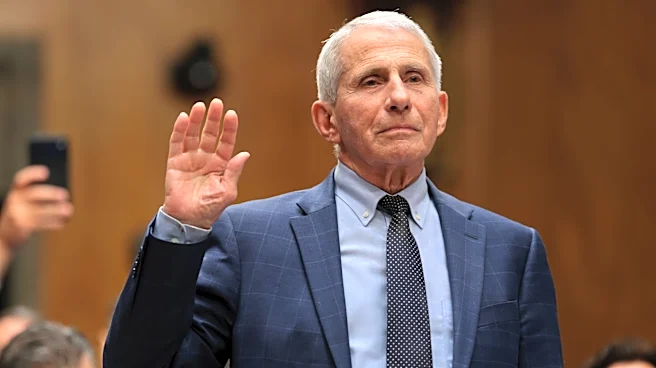
Republican Senators Rand Paul of Kentucky and Ron Johnson of Wisconsin have released text messages from January 2021 involving Dr. Anthony Fauci, former head of the National Institute of Allergy and Infectious Diseases (NIAID). These messages reveal private
discussions between Fauci, then-Surgeon General Vivek Murthy, and CDC head Rochelle Walensky concerning the safety of COVID-19 vaccines for pregnant women. In one exchange, Fauci privately noted a potential theoretical link between the second vaccine dose, significant cytokine storm, fever, and miscarriage in the first trimester. This private concern contrasts with his public statement a few days later to Howard Bauchner, editor-in-chief of The Journal of the American Medical Association, where Fauci stated the CDC found 'no red flags' in a study involving 10,000 pregnant women. The discrepancy between Fauci's private hypotheses and public assurances has drawn criticism and raised questions about transparency during the pandemic.
Why It's Important?
This revelation is important as it highlights a potential disconnect between private scientific discussions and public health messaging during a critical period of the COVID-19 pandemic. The perceived lack of transparency could further erode public trust in health officials and institutions, which has already been significantly damaged, according to a professor of epidemiology at the University of California, San Francisco. For the public, understanding the full scope of discussions and uncertainties among health leaders is crucial for informed decision-making and maintaining confidence in public health guidance. The differing statements could fuel ongoing debates about the communication strategies employed by health authorities and the balance between reassuring the public and fully disclosing potential uncertainties, particularly concerning vulnerable populations like pregnant women.
What's Next?
The release of these text messages is likely to intensify scrutiny on Dr. Fauci and other former public health officials regarding their communication during the pandemic. Republican lawmakers, who have been vocal critics of Fauci, may use these messages to push for further investigations or hearings into the government's COVID-19 response. This could lead to renewed calls for greater transparency from federal health agencies and potentially influence future public health communication policies. The public and medical community will likely continue to debate the implications of these disclosures, potentially leading to a re-evaluation of how scientific uncertainties are communicated to the public during health crises. The long-term impact could include legislative efforts to mandate more comprehensive disclosure protocols for public health officials.
Beyond the Headlines
Beyond the immediate political and public health implications, this situation touches upon deeper ethical considerations regarding scientific communication during a crisis. The tension between presenting a unified, confident front to encourage public compliance with health measures and fully disclosing all known uncertainties is a complex ethical dilemma for public health leaders. The incident could prompt a broader discussion within the scientific and medical communities about the best practices for communicating evolving scientific understanding, especially when data is incomplete or rapidly changing. It also underscores the challenge of maintaining public trust when initial information or assessments are later revised or contradicted by private communications, potentially leading to long-term skepticism about official narratives and expert advice.