



What's Happening?
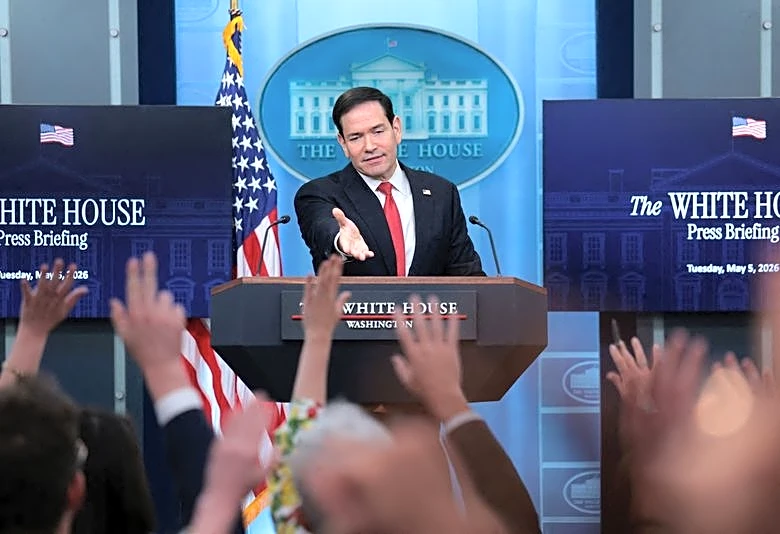
During a recent press conference, President Trump incorrectly stated that Spain is a 'BRICS' nation when asked about defense spending in the country. He asserted, “They’re a BRICS nation, Spain. Do you know what a BRICS nation is? You’ll figure it out.”
This statement is inaccurate, as BRICS is an economic bloc comprising Brazil, Russia, India, China, and South Africa, and no European Union member nation is part of it. This misstatement is one of several notable remarks made by President Trump, including a claim that he won all 50 states in an election, despite winning only 31, and a comment about IVF where he referred to himself as the 'father of IVF.' Other instances include blaming a Washington plane crash on Diversity, Equity, and Inclusion (DEI) initiatives and making a controversial remark about Prince Harry's marital issues. These comments have drawn public attention and criticism.
Why It's Important?
President Trump's public statements, particularly those containing factual inaccuracies or controversial remarks, can have significant implications for U.S. foreign policy, public discourse, and international relations. Mischaracterizing a country's economic alignment, such as Spain's status regarding BRICS, could potentially create diplomatic misunderstandings or misrepresent global economic partnerships. Domestically, comments on sensitive topics like DEI, election integrity, or personal attacks on political figures can polarize the electorate and influence public perception of political leadership. The repeated nature of such statements, as highlighted by the source, can also impact the credibility of official communications and contribute to a climate of misinformation, making it challenging for the public to discern accurate information from political rhetoric. Furthermore, these remarks often become focal points for media scrutiny and political debate, shaping the narrative around the President's administration and future political campaigns.
What's Next?
The immediate aftermath of such statements typically involves widespread media coverage, fact-checking by news organizations, and reactions from political opponents and international bodies. President Trump's past remarks have often led to further clarification or defense from his campaign or supporters, while critics use them to highlight perceived inconsistencies or misjudgments. In the context of an ongoing political landscape, these statements are likely to be leveraged in future political campaigns, debates, and public discussions, influencing voter sentiment and policy discussions. International partners may seek clarification or respond diplomatically to any mischaracterizations, potentially affecting bilateral relations. The ongoing scrutiny of President Trump's public speaking style and factual accuracy is expected to continue, particularly as he remains a prominent figure in U.S. politics.
Beyond the Headlines
Beyond the immediate political and diplomatic reactions, President Trump's communication style and the public's response to it reflect broader trends in political discourse, including the challenges of misinformation and the role of media in fact-checking. The repeated instances of controversial or factually incorrect statements raise questions about the standards of political rhetoric and the impact on public trust in institutions. The phenomenon also highlights the evolving nature of political communication in the digital age, where statements can be rapidly disseminated and scrutinized. Furthermore, the public's reaction to these remarks can reveal underlying societal divisions and the effectiveness of different communication strategies in mobilizing political bases. The long-term implications could include a shift in how political leaders are held accountable for their statements and a re-evaluation of the role of truth and accuracy in political discourse.