






What's Happening?
The International Rescue Committee (IRC), a global humanitarian organization founded in 1933 at the request of Albert Einstein, is actively seeking a MEAL Manager for its operations in Bangladesh. This role is crucial for strengthening the Monitoring,
Evaluation, Accountability, and Learning (MEAL) efforts across various programs, including Education, Emergency Preparedness and Response (EPR), and Economic Recovery and Development (ERD). The MEAL Manager will be responsible for ensuring high-quality data collection and reporting, fostering continuous learning, and enhancing accountability to the IRC's clients. The IRC operates in over 40 countries and 29 U.S. cities, providing emergency relief, resettlement assistance, and other vital services to populations affected by conflict and disaster. Since 2017, the organization has supported Rohingya refugees and Bangladeshi communities in areas like Cox's Bazar, Khulna, Barisal, and Chittagong, addressing climate change impacts, promoting economic recovery, education, and protection.
Why It's Important?
This recruitment highlights the IRC's commitment to rigorous program evaluation and accountability, which is vital for the effective delivery of humanitarian aid. By strengthening MEAL functions, the IRC aims to ensure that its interventions are impactful, evidence-based, and responsive to the needs of vulnerable populations. This focus on data-driven decision-making helps optimize resource allocation, improve program design, and demonstrate accountability to donors and beneficiaries. For the U.S., the effectiveness of organizations like the IRC, which operates in U.S. cities, reflects on the broader American humanitarian effort and its global impact. Robust MEAL practices also contribute to the transparency and credibility of international aid, which can influence public and governmental support for humanitarian initiatives originating from or supported by the U.S. The role's emphasis on learning and adaptation is critical in dynamic humanitarian contexts, allowing for continuous improvement and better outcomes for those affected by crises.
What's Next?
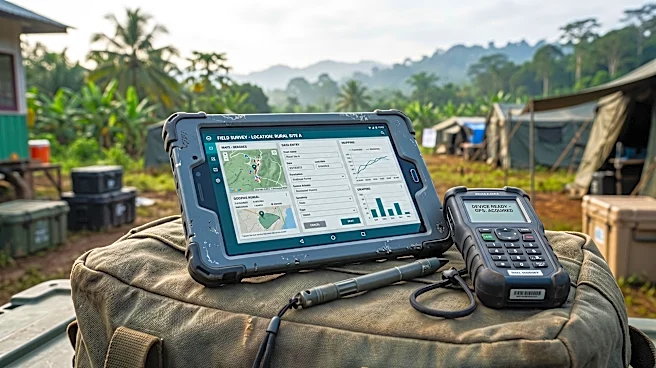
The IRC will proceed with the recruitment and selection of a qualified MEAL Manager for its Bangladesh programs. Once appointed, the new manager will be tasked with implementing and refining MEAL systems, leading a team of MEAL staff, and collaborating with program teams to integrate monitoring and evaluation into all stages of project cycles. This will involve developing MEAL inputs for proposals, managing MEAL budgets, overseeing data collection and analysis, and ensuring that client feedback mechanisms are effective. The ongoing efforts to strengthen MEAL will likely lead to more efficient and impactful humanitarian interventions in Bangladesh, particularly in areas affected by the Rohingya refugee crisis and climate change. The insights gained from these enhanced MEAL activities could also inform the IRC's strategies in other global and U.S.-based operations.
Beyond the Headlines
The emphasis on MEAL within humanitarian organizations like the IRC reflects a broader trend towards greater accountability and evidence-based practice in the aid sector. This shift is driven by increasing scrutiny from donors, a desire to maximize impact, and the ethical imperative to serve affected populations effectively. The role of a MEAL Manager extends beyond mere data collection; it involves fostering a culture of learning and adaptation within the organization. This can lead to more innovative and context-specific solutions to complex humanitarian challenges. Furthermore, by focusing on accountability to affected populations, the IRC is promoting a more participatory and rights-based approach to aid, empowering beneficiaries and ensuring their voices are heard in program design and implementation. This commitment to integrity, service, equality, and accountability, as outlined in the IRC Way, underpins the long-term sustainability and ethical foundation of humanitarian work.