



What's Happening?
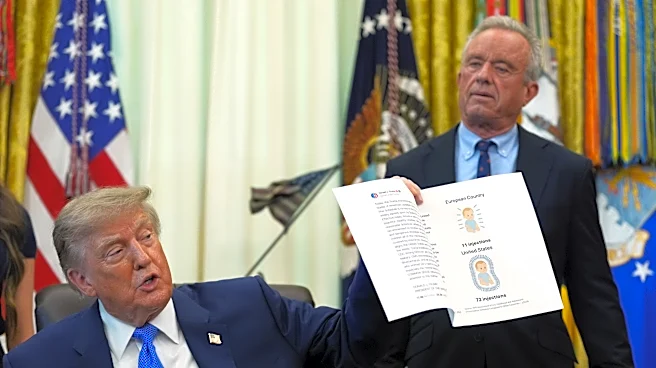
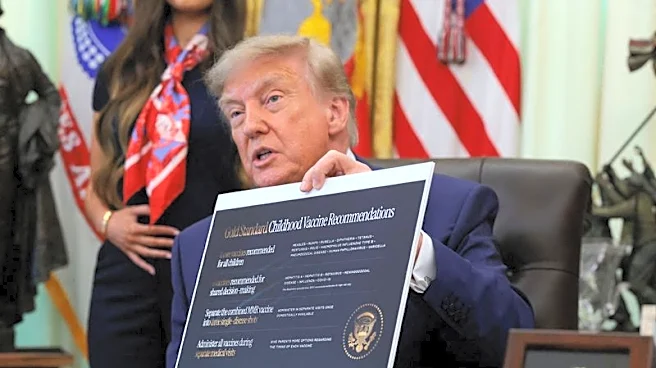
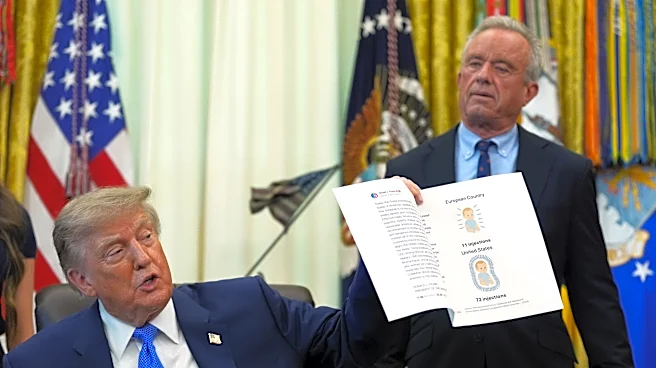
U.S. Representative Lois Frankel has publicly criticized President Donald Trump's recent executive order that alters the national childhood vaccine schedule. Frankel, who represents Florida's 22nd Congressional District, expressed concerns that the order,
which suggests spacing out childhood vaccines into separate medical visits, contradicts the advice of pediatric experts and could endanger children's health. The executive order promotes the separation of the measles, mumps, and rubella (MMR) vaccine into three individual shots and calls for all childhood immunizations to be administered at separate appointments. Frankel argues that these changes could lead to more sick children, increased doctor visits, and higher healthcare costs for families. She emphasized that medical decisions should be based on scientific evidence rather than political ideology.
Why It's Important?
The executive order has significant implications for public health policy and the ongoing debate over vaccine safety and scheduling. By advocating for changes that are not supported by the majority of medical experts, the order could undermine public confidence in vaccines, potentially leading to lower vaccination rates and increased vulnerability to preventable diseases. This move also highlights the tension between political decisions and scientific recommendations, raising concerns about the influence of political ideology on public health policies. The potential increase in healthcare costs and the risk of more frequent illnesses among children could have broader economic and social impacts, affecting families and healthcare systems across the country.
What's Next?
As the executive order takes effect, it is likely to face scrutiny and opposition from medical professionals, public health advocates, and policymakers who support evidence-based vaccine schedules. There may be calls for legislative or legal challenges to the order, as well as efforts to educate the public about the importance of adhering to established vaccine guidelines. The upcoming elections could also influence the future of this policy, as candidates and voters weigh in on the role of science in public health decision-making.