



What's Happening?
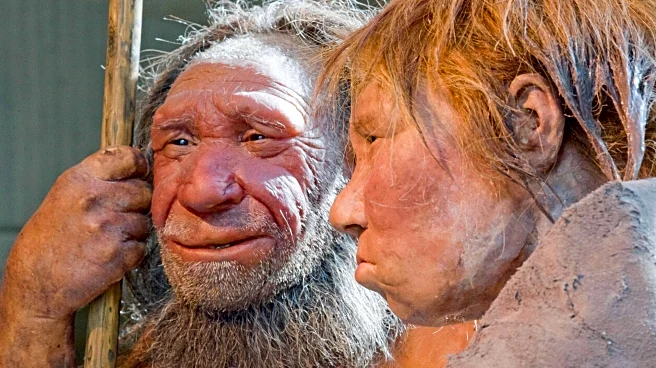
A recent study published in the Proceedings of the Royal Society B: Biological Sciences has provided new insights into the kinship structures of a 5,500-year-old hunter-gatherer community on Gotland Island, Sweden. Researchers from Uppsala University
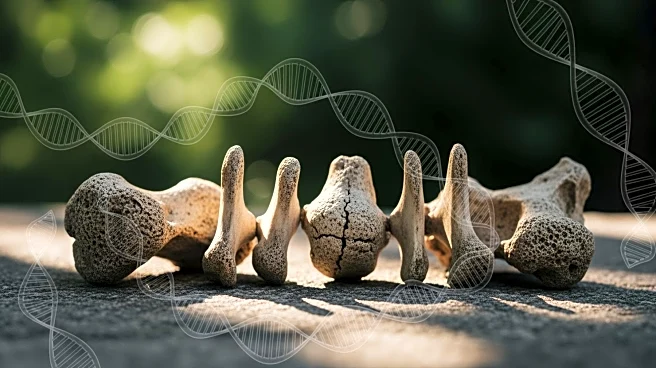
analyzed DNA from remains found in the Aivide burial site, revealing that many individuals buried together were not first-degree relatives, as previously assumed, but rather second- or third-degree relatives, such as aunts, uncles, or cousins. This discovery challenges earlier assumptions about the social organization of one of Europe’s last pure hunter-gatherer groups and highlights the importance of extended family networks in their society.
Why It's Important?
The study's findings have significant implications for understanding the social dynamics of ancient hunter-gatherer communities. By revealing the complex kinship structures, the research suggests that extended family relationships played a crucial role in the social organization and survival of these communities. This challenges the traditional view that immediate family ties were the primary social bonds in prehistoric societies. The insights gained from this study could reshape how anthropologists and archaeologists interpret social structures in ancient human communities, providing a more nuanced understanding of how these societies functioned and thrived.
What's Next?
The study opens new avenues for research into the social dynamics of ancient communities. Future studies could apply similar genetic analysis techniques to other archaeological sites to further explore the role of extended family networks in different cultural contexts. Additionally, the findings may prompt a reevaluation of existing archaeological interpretations, encouraging researchers to consider the broader social implications of kinship structures in prehistoric societies. This could lead to a more comprehensive understanding of human social evolution and the factors that influenced the development of complex social systems.
Beyond the Headlines
The research highlights the potential of modern genetic techniques to uncover hidden aspects of ancient societies. By combining genetic data with archaeological evidence, researchers can reconstruct detailed pictures of social organization that were previously inaccessible. This interdisciplinary approach not only enhances our understanding of past human societies but also demonstrates the value of integrating scientific methods with traditional archaeological practices. The study serves as a reminder of the intricate social fabric that underpinned ancient communities and the enduring importance of family networks in human history.