




What's Happening?
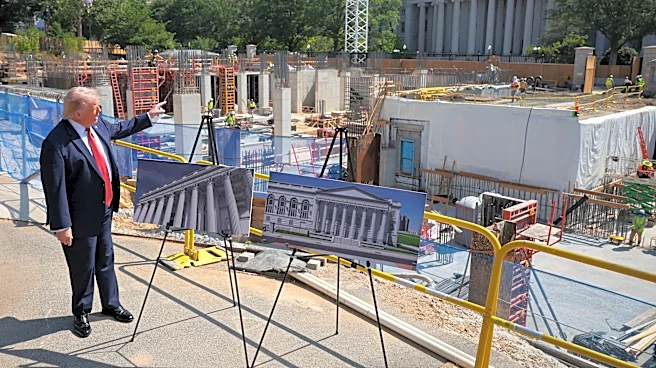
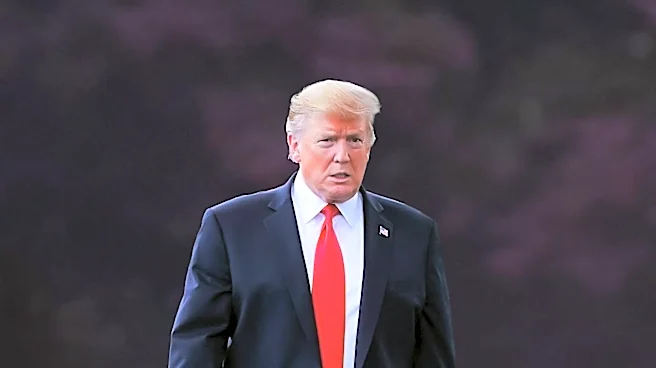
President Trump has ignited new calls for his removal from office after posting a surreal, AI-generated video on social media. The video depicted him strolling through a supposedly completed White House ballroom alongside a digital representation of George
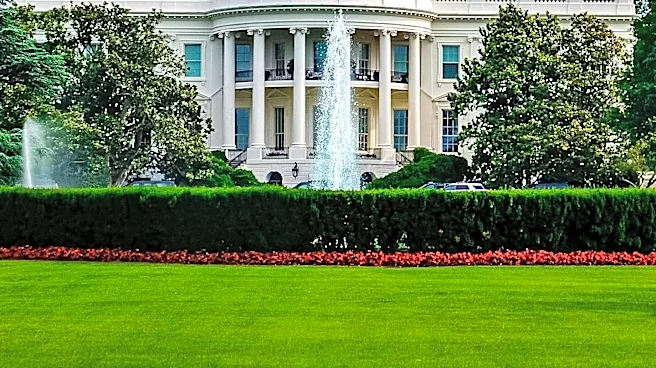
Washington, who has been deceased for 226 years. In the accompanying caption, President Trump invoked an imaginary conversation with Washington, stating, “Thank you, George, for some of your brilliant ideas on this great Military Complex/Ballroom! President DJT.” This post drew a mix of alarm and mockery, with California Governor Gavin Newsom declaring President Trump unfit for office and calling for the invocation of the 25th Amendment, which outlines the constitutional process for removing a president unable to discharge their duties. The post also highlighted President Trump's ongoing $927 million ballroom project, which has already involved the demolition of the historic East Wing of the White House. The U.S. Court of Appeals for the District of Columbia Circuit recently ordered a halt to work on this project, though the order is on hold for 14 days to allow for an appeal.
Why It's Important?
This incident is important because it intensifies existing concerns about President Trump's mental fitness for office, particularly given his age as the oldest person ever inaugurated as president. Calls for the 25th Amendment, while not new, gain renewed traction with such public displays, potentially impacting political stability and public confidence in leadership. The controversy surrounding the White House ballroom project also highlights broader issues of presidential spending, historical preservation, and public accountability. The demolition of a historic part of the White House for a 'vanity project' has drawn criticism and legal challenges, reflecting a tension between presidential prerogative and established norms. The use of AI-generated content in a presidential communication also raises questions about the authenticity of official messaging and the potential for misinformation, setting a precedent for future political discourse. The public's reaction, ranging from alarm to mockery, underscores a deeply divided political landscape and the challenges of maintaining decorum in high office.
What's Next?
In the immediate future, the administration has 14 days to appeal the U.S. Court of Appeals' order to halt work on the White House ballroom project. This legal battle will determine the fate of the controversial construction. Politically, Governor Newsom's call for the 25th Amendment is likely to be echoed by other critics, though the actual process for invoking it is complex and requires significant support from the Vice President and a majority of the Cabinet, or a two-thirds vote in both houses of Congress. President Trump's social media activity will likely continue to be scrutinized, potentially leading to further public and political reactions. The incident may also prompt discussions within the White House regarding communication strategies and the use of advanced technologies like AI in official statements. The broader implications for the upcoming political cycle could include increased focus on candidates' mental and physical health, as well as their approach to historical preservation and public spending.
Beyond the Headlines
This event delves into the ethical and cultural dimensions of presidential conduct and the evolving nature of public perception in the digital age. The use of AI to create a fictional interaction with a historical figure blurs the lines between reality and simulation, raising questions about the integrity of public discourse and the potential for 'deepfake' technology to manipulate public opinion. Culturally, President Trump's apparent disregard for historical precedent, particularly in modeling the ballroom after Versailles—a symbol of royal grandeur that George Washington actively avoided—highlights a clash between traditional American values of republicanism and a more ostentatious, personalized style of leadership. The public's dissatisfaction with 'vanity projects' suggests a deeper concern about the allocation of taxpayer money and the perceived priorities of the executive branch. This incident could contribute to a long-term shift in how presidential fitness is assessed, moving beyond traditional metrics to include digital conduct and the responsible use of emerging technologies.