





What's Happening?
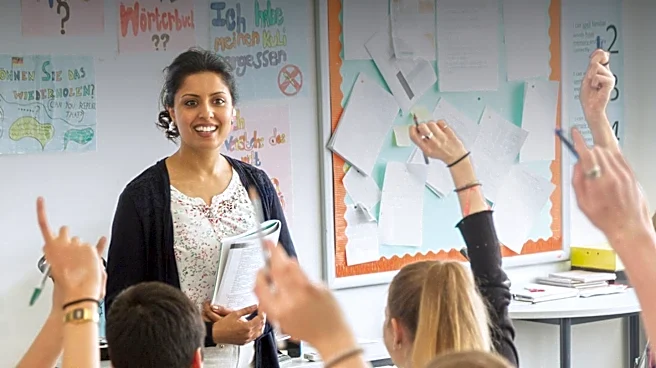
Teachers are increasingly utilizing de-escalation strategies to manage tense classroom situations and prevent them from escalating into crises. De-escalation involves a series of steps to calm a moment, including spotting warning signs, active listening,
mindful body language, and setting clear limits. The approach emphasizes responding calmly and steadily, rather than mirroring agitation. Key tactics include lowering one's voice, giving students space, removing an audience, acknowledging feelings, and offering simple choices. The strategies are tailored to different grade levels, from using a 'calm corner' for elementary students to offering 'space, time, and return' for high schoolers. Post-incident, restorative conversations, behavior logging, and family contact are recommended to repair relationships and prevent future occurrences.
Why It's Important?
The implementation of de-escalation strategies in U.S. classrooms is vital for creating safer and more conducive learning environments. This proactive approach helps teachers address student distress before it manifests as disruptive or harmful behavior, thereby reducing the need for more severe disciplinary actions. By focusing on empathy, clear communication, and emotional regulation, these strategies can improve teacher-student relationships and foster a classroom culture of understanding and respect. This is particularly important in diverse educational settings where students may come with varying emotional needs and backgrounds. The ability to de-escalate situations effectively can lead to fewer classroom disruptions, increased instructional time, and better mental health outcomes for both students and educators, contributing to a more stable and productive educational system nationwide.
What's Next?
Teachers are encouraged to keep a 'playbook' of de-escalation strategies readily available and to revisit it before potentially challenging weeks. Continuous practice and training are highlighted as essential for mastering these skills, as staying calm under pressure does not come naturally to everyone. The process involves noticing early cues, maintaining personal calm, removing the audience, offering choices, and debriefing after an incident. Schools may continue to invest in professional development programs that train educators in these techniques, recognizing their importance in modern classroom management. The goal is to empower teachers to respond to signals rather than just outbursts, fostering a more preventative and supportive approach to student behavior.
Beyond the Headlines
The emphasis on de-escalation in classrooms reflects a broader societal shift towards understanding and addressing the root causes of challenging behaviors, rather than simply punishing them. This approach has ethical implications, as it prioritizes student well-being and the preservation of dignity, even in moments of distress. It also acknowledges the psychological complexities of student behavior, recognizing that aggression often stems from underlying stress or emotional issues. Culturally, it promotes a more compassionate and restorative justice model within educational institutions. Long-term, widespread adoption of these strategies could lead to a significant reduction in school-related conflicts and a more supportive environment for all students, potentially impacting their social-emotional development and future success.