



What's Happening?
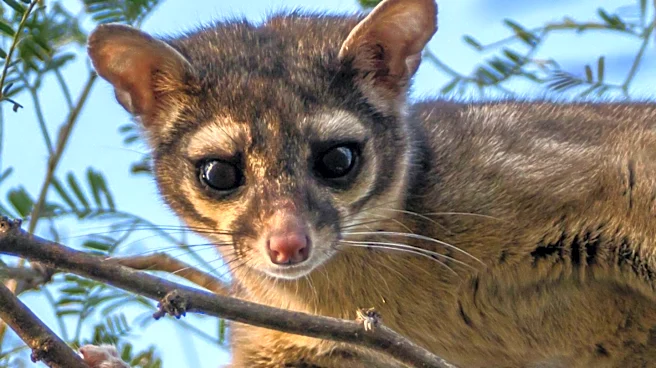
A resident in Longmont, Colorado, discovered a rare ringtail, also known as a ring-tailed cat, in their kitchen pantry. Initially mistaken for a raccoon, the animal was identified by wildlife operators as a ringtail (Bassariscus astutus), a nocturnal
mammal belonging to the Procyonidae family, related to raccoons and coatis, not felines. The ringtail was safely captured and transported to the Greenwood Wildlife Rehabilitation Center for assessment. Mysti Tatro, community relations manager at the center, noted the rarity of such encounters, as ringtails are typically elusive and primarily inhabit desert areas of southern Colorado, with infrequent sightings in the Front Range hills and western canyons. After confirming its good health, the animal was released into a suitable habitat with rocky walls and water, consistent with its natural environment.
Why It's Important?
The discovery of a ringtail in a residential area highlights the increasing interaction between wildlife and human populations, particularly as urban areas expand into natural habitats. This incident underscores the importance of wildlife rehabilitation centers like Greenwood, which play a crucial role in rescuing and reintroducing native species. For Colorado, the ringtail is a protected and rarely observed mammal, making its presence in a populated area a significant event for local wildlife conservation efforts. It also serves as a reminder to the public about the proper protocol for encountering wild animals, emphasizing the need to contact authorized wildlife services rather than attempting to handle or domesticate them. This event contributes to public awareness regarding the biodiversity present in the region and the challenges faced by elusive species.
What's Next?
Following its successful release into a more appropriate habitat, the ringtail is expected to resume its natural behaviors in an environment better suited to its needs. The Colorado Parks and Wildlife will continue to monitor wildlife populations and educate the public on coexisting with native species. This incident may prompt further public awareness campaigns about local wildlife, particularly regarding nocturnal and elusive animals. Wildlife centers will likely continue to emphasize the importance of not attempting to domesticate wild animals and instead contacting professionals for assistance. The event serves as a case study for how human encroachment can lead to unexpected wildlife encounters and the critical role of conservation efforts in managing such situations.
Beyond the Headlines
This incident subtly highlights the broader ecological implications of human expansion and climate change, which can push wildlife into unexpected territories. While this specific ringtail was healthy and successfully relocated, such occurrences can indicate habitat fragmentation or resource scarcity in their natural environments. The legal framework in Colorado, which prohibits taking wildlife from its natural habitat for domestication, underscores an ethical stance on wildlife preservation and the importance of maintaining ecological balance. The story also touches on the public's perception of wildlife, often leading to misidentification (like mistaking a ringtail for a raccoon), and the need for greater education to foster respect and understanding for native species. It's a reminder that even in seemingly mundane settings, the wild can unexpectedly appear, bringing with it lessons in conservation and coexistence.