










What's Happening?
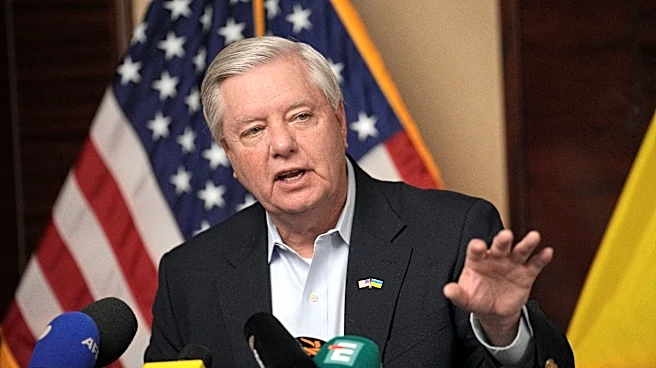
The unexpected death of South Carolina Republican Senator Lindsey Graham has sent shockwaves through Washington. Known for his role as a veteran politician, Graham was a prominent figure in U.S. politics, recognized for his deal-making abilities and strong
military advocacy. Initially a staunch critic of President Trump, Graham later became one of his close allies on Capitol Hill. His death has prompted reflections on his political journey and the impact he had on American politics. Former Republican Senator Jeff Flake, who served alongside Graham, described their relationship as one of friendship despite occasional disagreements. The political community is now considering the legacy Graham leaves behind, particularly in terms of his influence on military policy and his shifting political alliances.
Why It's Important?
Senator Graham's death marks the end of an era for a significant political figure who played a crucial role in shaping U.S. military and foreign policy. His ability to navigate complex political landscapes and form alliances, even with those he initially opposed, highlights his adaptability and influence. Graham's legacy will likely be evaluated in terms of his contributions to military policy and his role in the Republican Party's dynamics, especially during President Trump's administration. His passing may lead to shifts in political alliances and strategies within the party, affecting future legislative priorities and the balance of power in the Senate.
What's Next?
In the wake of Senator Graham's death, there will be a period of mourning and reflection among his colleagues and constituents. The process to fill his Senate seat will begin, potentially leading to a special election or appointment, depending on state laws. This transition could influence the political landscape in South Carolina and the broader national political scene. Additionally, discussions about Graham's legacy and his impact on U.S. politics will continue, possibly influencing future policy debates and the direction of the Republican Party.