



What's Happening?
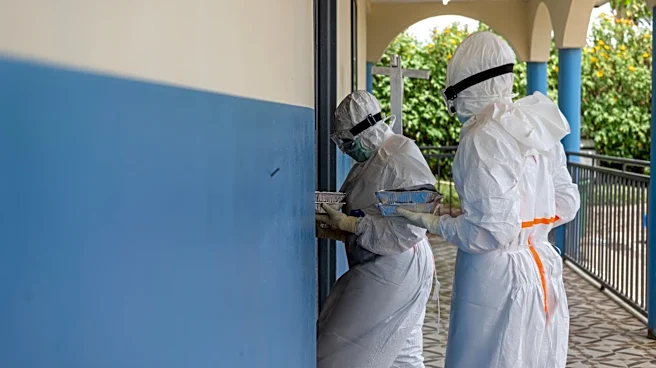
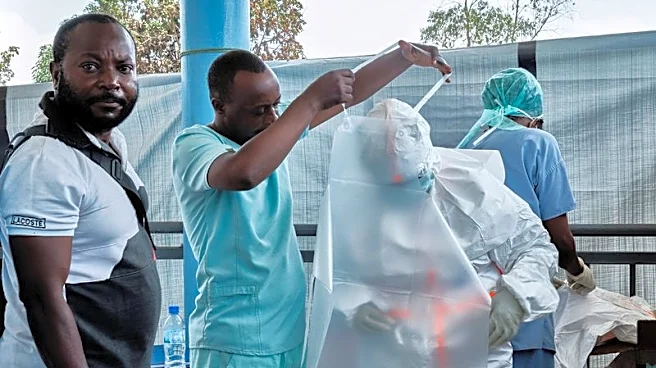
The Ebola outbreak in the Democratic Republic of the Congo is worsening, with over 1,000 suspected and confirmed cases and at least 223 deaths. Misinformation about the virus is spreading rapidly, complicating response efforts. Leonard Musinguzi, a community
and surveillance officer for the International Rescue Committee in Uganda, is working to combat misinformation and prepare communities. However, reduced funding from governments, including the U.S., is limiting the resources available for public health messaging and other critical response activities. The U.S. State Department claims that recent funding changes have not significantly affected global health programs, but aid workers report challenges due to decreased financial support.
Why It's Important?
The reduction in aid funding could have severe consequences for the Ebola response in central Africa. Effective public health messaging is crucial to combat misinformation and ensure communities are informed about the disease. Without adequate funding, efforts to educate the public and train healthcare workers are hampered, potentially leading to further spread of the virus. The situation highlights the importance of sustained international support for global health initiatives, as well as the need for accurate information to prevent panic and misinformation.
What's Next?
The international community may need to reassess funding strategies to ensure that frontline response efforts are adequately supported. There could be increased advocacy for restoring or increasing aid to organizations working on the ground. The U.S. and other governments may face pressure to demonstrate their commitment to global health security by providing the necessary resources to combat the outbreak effectively. Monitoring the situation will be crucial to prevent further escalation and to support the affected regions.