







What's Happening?
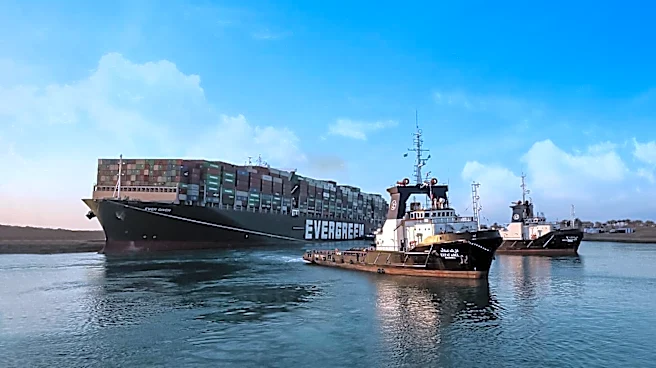
Vessel traffic through the Strait of Hormuz has decreased due to ongoing security concerns stemming from U.S.-Iran tensions. Recent data shows a drop in the number of cargo vessels crossing the strait, with only three vessels reported on a recent day.
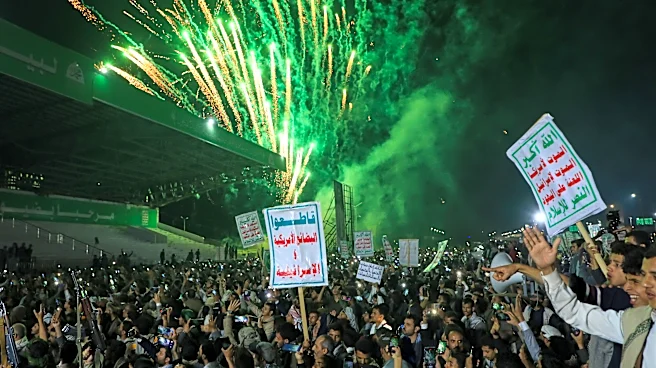
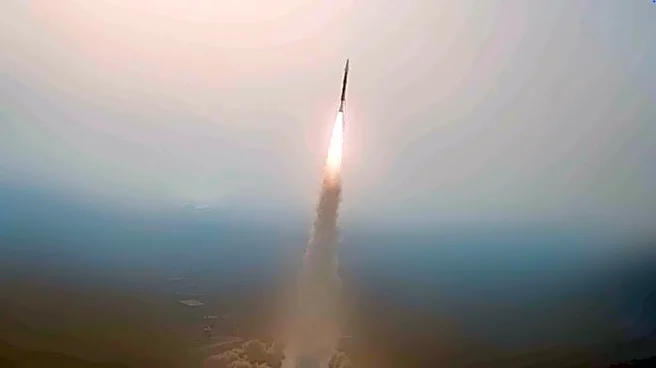
The U.S. military has conducted multiple strikes on Iran, and threats from Yemen's Houthi militia have further complicated the situation. The Houthis have warned against loading or discharging cargo at Saudi ports, leading to a reversal of course for two Saudi oil tankers.
Why It's Important?
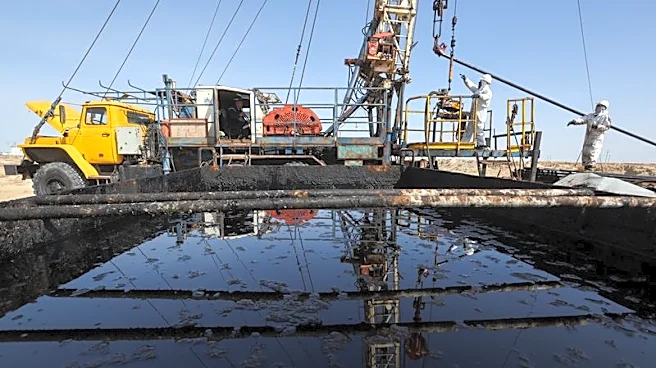
The Strait of Hormuz is a critical chokepoint for global energy supplies, and disruptions can have significant implications for international trade and energy markets. The reduced vessel traffic reflects heightened security risks, which could lead to increased shipping costs and potential supply chain disruptions. The ongoing conflict between the U.S. and Iran, along with Houthi threats, poses a risk to the stability of global oil markets, potentially affecting prices and availability.
What's Next?
Continued military actions and threats in the region may lead to further reductions in vessel traffic through the Strait of Hormuz. Shipping companies may seek alternative routes or increase security measures to mitigate risks. Diplomatic efforts may be necessary to de-escalate tensions and ensure the safe passage of vessels. The international community, including major oil-importing countries, will likely monitor the situation closely, as prolonged disruptions could have widespread economic impacts.