


What's Happening?
More than 600 days into a record wait for over $15 billion in long-term federal recovery aid, Mayor Karen Bass has urged FEMA to release funding for six additional wildfire-recovery projects in Los Angeles. These projects, part of a separate FEMA Hazard
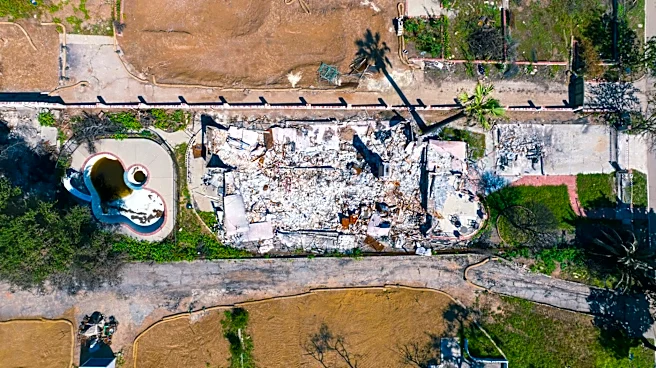
Mitigation Grant Program designed to reduce future disaster damage, have been stalled in review for over four months. Representatives Maxine Waters and Brad Sherman noted that FEMA's public database showed zero dollars obligated from a potential $745 million in recovery funding for Los Angeles as of July. In an August 31 letter, Waters and Sherman requested FEMA to clear the six applications and provide a status update by September 4. The city's projects have advanced through state review, but Los Angeles has not received a timeline from FEMA headquarters for final action. Two of these projects are directly aimed at supporting individuals rebuilding after the Palisades and Eaton fires, including establishing a one-stop center for permits and inspections on fire-damaged properties and providing rebates for homeowners who add wildfire-resistant features and defensible space during rebuilding.
Why It's Important?
The prolonged delay in FEMA funding for these critical wildfire recovery projects has significant implications for communities in Los Angeles, particularly those affected by the Palisades and Eaton fires. The Hazard Mitigation Grant Program is designed to proactively reduce the impact of future disasters, and the stalling of these projects means that vulnerable areas remain at higher risk. Homeowners attempting to rebuild are facing additional hurdles without the promised rebates and streamlined permit processes, potentially slowing down recovery efforts and increasing financial burdens. The lack of obligated funds, despite the projects clearing state review, highlights a bureaucratic bottleneck that is preventing essential infrastructure and homeowner support from being implemented. This situation could erode public trust in federal disaster response mechanisms and leave communities less prepared for the increasing threat of wildfires, impacting both public safety and economic stability in affected regions.
What's Next?
Following the letter from Representatives Waters and Sherman, FEMA is expected to respond with a status update on the six stalled applications by September 4. The city of Los Angeles, led by Mayor Karen Bass, will likely continue to press FEMA for a definitive timeline for final action on these projects. The outcome of these discussions will determine when the one-stop center for permits and inspections can be established and when homeowners can begin receiving rebates for wildfire-resistant features. If the delays persist, there could be increased pressure from local and state officials, potentially leading to further congressional inquiries or public advocacy campaigns to expedite the release of funds. The resolution of these specific projects could also set a precedent for how FEMA handles other long-term federal disaster-recovery aid applications across the country, particularly in areas prone to natural disasters.
Beyond the Headlines
The ongoing delays in FEMA funding for wildfire recovery projects in Los Angeles underscore broader systemic challenges within federal disaster relief programs. This situation highlights the complex interplay between federal agencies, state-level reviews, and local community needs, often resulting in significant bottlenecks that impede timely recovery. Beyond the immediate impact on fire victims, these delays can exacerbate socio-economic disparities, as communities with fewer resources may struggle more to absorb the costs of rebuilding without federal assistance. The emphasis on hazard mitigation, while crucial for long-term resilience, becomes ineffective if the funding mechanisms are not agile enough to support rapid implementation. This scenario also raises questions about the efficiency and responsiveness of federal disaster management in an era of increasing climate-related events, prompting a need for potential reforms to streamline the allocation and disbursement of critical recovery funds.