







What's Happening?
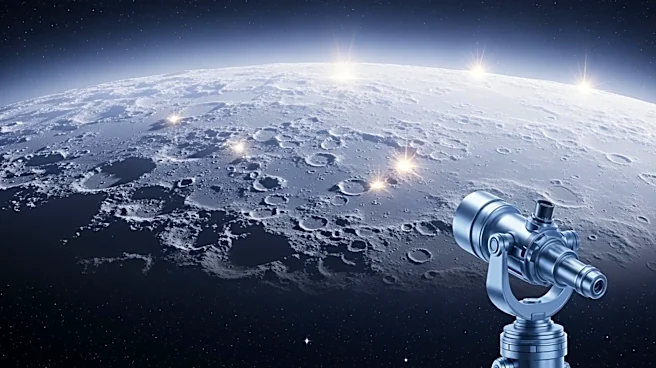
NASA's Artemis 2 mission, the first crewed moon flight since Apollo 17, has reported sightings of meteoroid impact flashes on the far side of the moon. The astronauts observed these flashes with the unaided eye, a task challenging for cameras. This observation
is part of the Impact Flash citizen science project, which aims to gather data on the location and brightness of such flashes. The project is under the Geophysical Exploration of the Dynamics and Evolution of the Solar System (GEODES) within NASA's Solar System Exploration Research Virtual Institute.
Why It's Important?
The observations made by the Artemis 2 astronauts are crucial for understanding the frequency and impact of meteoroid collisions on the moon. This data is vital for scientists studying lunar geology and the potential hazards of meteoroid impacts on future lunar missions. The findings could influence the design and safety measures for the planned Artemis Base Camp near the moon's south pole. Understanding impact risks is essential for ensuring the longevity and safety of human outposts on the lunar surface.
What's Next?
The Artemis 2 mission's data will be analyzed alongside observations from NASA's Lunar Reconnaissance Orbiter and future lunar surface instruments. This comprehensive data collection will help refine models of impact risks and inform the design of lunar habitats. As NASA progresses with its Artemis program, further missions will continue to gather data, enhancing our understanding of the moon's environment and preparing for sustained human presence.