






What's Happening?
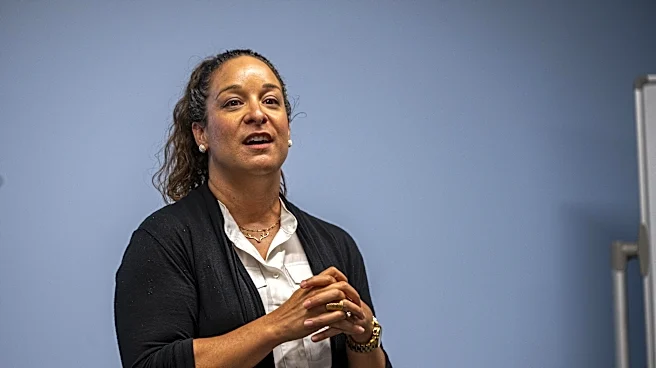
Sarah Thompson, president of the Faculty Association of California Community Colleges, has voiced concerns regarding the heavy workloads faced by community college professors. She stated that professors are expected to evaluate student progress and provide
direct support without the aid of teaching assistants, a task she deems nearly impossible given the scale. Thompson specifically noted that teaching 30 classes in a week, as some professors reportedly do, makes it difficult to maintain quality instruction. This commentary comes amidst reports of professors like Thien-Huong Ninh Villarreal, who, in 2024, earned nearly $800,000 while teaching 30 sociology, ethnic studies, and business classes to approximately 1,100 students across multiple institutions. Chris Ferguson, an executive vice chancellor overseeing California’s community colleges, acknowledged that multiple teaching jobs are not inherently problematic unless the workload compromises engagement, feedback, assessment, or student support, in which case the college district would be accountable.
Why It's Important?
The issue of community college professor workloads and compensation has significant implications for the quality of education and the financial sustainability of the California community college system. If professors are stretched too thin, student learning outcomes could suffer due to insufficient individual attention and feedback. This situation also raises questions about resource allocation within the educational system, particularly if some professors are earning substantial incomes from multiple teaching positions while others struggle with unmanageable class sizes without adequate support. The accountability framework, which places responsibility on individual college districts rather than the statewide system for managing faculty workload issues, could lead to inconsistencies in educational quality and faculty support across different institutions. This could impact student access to quality education and the overall reputation of the community college system.
What's Next?
The ongoing discussion about community college faculty workloads and compensation may prompt further scrutiny from state education officials and legislative bodies. College districts might face increased pressure to review and potentially revise their policies regarding the number of courses professors can teach and the support systems available to them. There could be calls for greater transparency in faculty compensation and workload reporting. Additionally, student advocacy groups and faculty associations may push for reforms that prioritize student-teacher ratios and the provision of teaching assistants to ensure adequate support for both educators and learners. The current framework, which holds individual college districts accountable, suggests that any immediate changes or investigations would likely occur at the local level, potentially leading to varied responses across California's community colleges.
Beyond the Headlines
Beyond the immediate concerns of workload and compensation, this situation highlights a broader tension within the higher education system: balancing cost-efficiency with educational quality. The reliance on a limited number of professors to teach a large volume of courses, particularly in online formats, may be seen as a cost-saving measure, but it risks compromising the personalized learning experience crucial for student success. This issue also touches upon the evolving nature of academic employment, where some faculty members may piece together multiple part-time or adjunct positions to achieve a living wage, while others, as highlighted in the report, manage to secure highly lucrative arrangements. The ethical implications of such disparities, and the potential for 'teaching to scale' to depersonalize education, warrant deeper consideration. It also raises questions about the effectiveness of oversight mechanisms in ensuring equitable and high-quality educational delivery across the vast community college system.